

Table of Contents
- Why Most MT5 Expert Advisors Fail Live Traders
- The 5 Core Metrics That Define a Profitable MT5 Expert Advisor
- MT5 EA Backtesting Best Practices That Predict Live Performance
- Forex EA Drawdown Analysis: Setting Realistic Risk Limits
- NFA Compliance for Automated Trading Systems: What US Traders Must Check
- Verifying an EA Beyond the Marketing Claims
- Red Flags and Common Mistakes When Buying EAs
- Conclusion: Build a Due Diligence Checklist for Every EA
- Frequently Asked Questions
Last Updated: September 5, 2026
Why Most MT5 Expert Advisors Fail Live Traders
The gap between a promising backtest and a funded live account is where most MT5 expert advisors meet their end. A trading robot can post an attractive equity curve in historical data, yet fail within weeks when exposed to real market conditions, latency, and slippage. The core issue rarely lies in the strategy logic itself; it lies in how that logic was validated and deployed.
Most traders skip the verification stage entirely. They see a screenshot of a rising equity curve, purchase the EA, and attach it to a live account without understanding its risk profile or drawdown behavior. This approach converts capital into tuition fees. Identifying profitable MT5 expert advisors for forex requires a systematic due diligence framework, not a leap of faith. At EZMT5, we provide professional-grade tools to help users start trading like a pro.
A profitable MT5 expert advisor is one that demonstrates consistent, risk-adjusted returns across multiple market regimes, verified through independent testing. The marketing materials that sell these systems rarely tell you how the robot behaves during a volatility spike or a prolonged trend reversal. That information only surfaces when you examine the underlying metrics and test the code yourself.
The 5 Core Metrics That Define a Profitable MT5 Expert Advisor
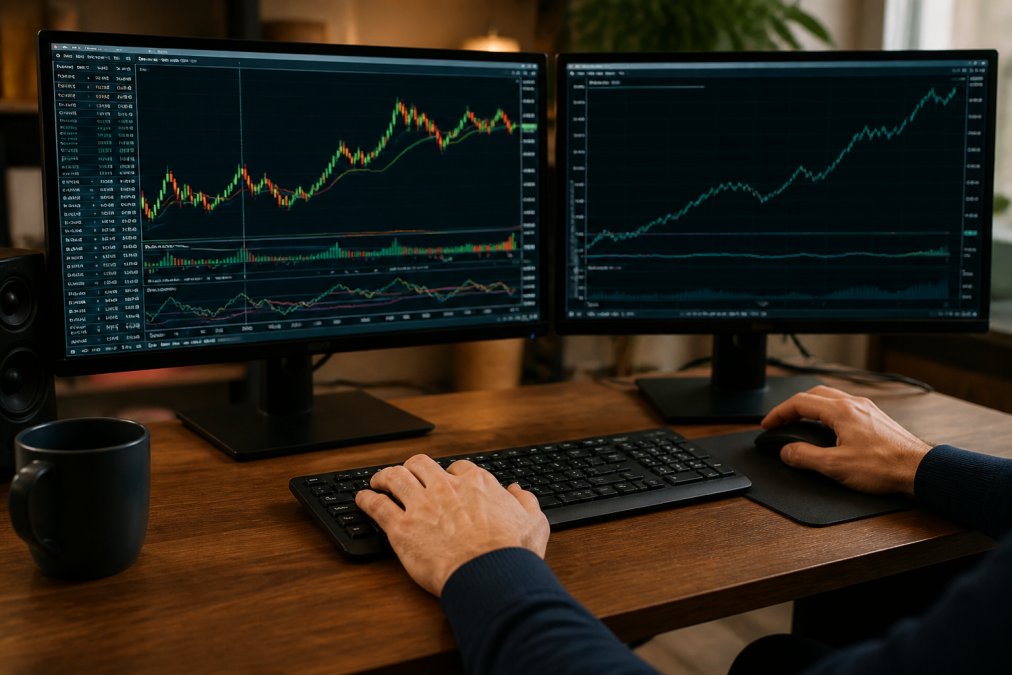
Every automated trading system can be reduced to five numbers that reveal its true character. These metrics do not guarantee future performance, but they expose whether a robot has a statistical edge or is simply riding on luck and high use. Ignore any one of them and you are trading blind.
The five metrics are profit factor, win rate, maximum drawdown, risk-to-reward ratio, and average trade duration. Together they describe how the EA makes money, how much it risks to do so, and how painful the losing streaks will be. A system with a profit factor above 1.5 and a maximum drawdown under 20 percent is generally considered healthy, though the acceptable range shifts depending on the strategy type and the instruments traded.
Profit Factor and Win Rate: Reading the Numbers Correctly
Profit factor is the gross profit divided by the gross loss. A value of 1.5 means the system earns $1.50 for every $1.00 it loses. Win rate, by contrast, tells you what percentage of individual trades close in profit. The trap is assuming a high win rate equals a good system. A robot that wins 90 percent of the time can still lose money if the losing 10 percent of trades wipe out all prior gains.
A more reliable combination is a moderate win rate paired with a favorable risk-to-reward ratio. A scalping EA that wins 60 percent of trades with a 1:1 risk-to-reward ratio is fundamentally different from a trend-following robot that wins 35 percent of trades but targets a 1:3 ratio. Both can be profitable; neither can be judged on win rate alone.
Maximum Drawdown and Risk-to-Reward Ratio
Maximum drawdown measures the largest peak-to-trough decline in the equity curve. This number tells you the worst case you must survive emotionally and financially. A system with a 40 percent drawdown requires you to watch nearly half your account evaporate before recovering, which most retail traders cannot tolerate without abandoning the strategy at the bottom.
The risk-to-reward ratio defines the average profit relative to the average loss per trade. Combined with win rate, it determines the breakeven threshold. The ratio also reveals how the EA handles losing streaks. A system with a low risk-to-reward ratio needs an exceptionally high win rate to stay profitable, making it fragile during ranging markets. For a practical framework on evaluating these metrics against live conditions, the CFTC guidance on retail forex trading risks provides a solid regulatory perspective on what traders should verify before committing capital.
MT5 EA Backtesting Best Practices That Predict Live Performance
Backtesting is where the due diligence process either succeeds or fails. The goal is not to find the EA with the prettiest equity curve; it is to find one whose backtest results will survive contact with live markets. That requires testing practices designed to eliminate false confidence.
The first rule is to use tick data rather than control points or open price data. MT5 offers three backtesting models, and the “Every tick based on real ticks” option is the only one that accounts for the gaps and spikes that occur in actual market data. The faster models produce smoother curves that flatter the EA and hide execution risk. Testing on a demo account afterward validates whether the robot behaves as expected in real-time conditions. MT5 EA backtesting best practices also demand that you test across multiple timeframes and currency pairs, not just the one the vendor used in their marketing.
Avoiding Curve Fitting and Over-Optimization
Curve fitting occurs when an EA’s parameters are tuned so precisely to historical data that the robot memorizes past price movements instead of learning general patterns. The result is an over-optimized system that performs brilliantly in backtests and collapses in live trading. The equity curve looks like a straight line upward; the reality is a strategy with no predictive power.
You can detect over-optimization by running the EA on out-of-sample data, meaning a period the optimizer never saw. A strong system shows a modest performance decline out-of-sample. An over-fitted system degrades sharply or becomes unprofitable. Walk-forward analysis, where the EA is optimized on one period and tested on the next sequentially, provides a more honest assessment of stability than a single historical run.
Forward Testing on Demo Accounts Before Going Live
Forward testing is the bridge between historical validation and real capital. It means running the EA on a demo account with live market data for several weeks, monitoring whether the robot executes trades as the backtest predicted. This phase catches issues that historical data cannot reveal, such as broker-specific requotes, slippage during news events, and execution delays. The NFA investor education resources on forex trading outlines why verifying automated systems under live conditions matters before risking funds.
A minimum of four to eight weeks of forward testing on a demo account gives you enough trades to evaluate statistical significance. Fewer than 30 trades is not a sample; it is noise. During this period, track the live results against the backtested equity curve and investigate any material divergence. The point is not to confirm the EA works; it is to find out how it fails so you can decide whether that failure mode is acceptable.
Forex EA Drawdown Analysis: Setting Realistic Risk Limits
Forex EA drawdown analysis is the practice of quantifying how much equity a robot can lose before you intervene, and setting risk parameters that keep those losses within your tolerance. Drawdown is not a flaw in the system; it is a feature of trading. Every strategy experiences losing streaks, and the EA that never shows a drawdown is either lying or not trading.
The critical question is whether the maximum drawdown observed in testing aligns with your account size and risk appetite. If the EA shows a 25 percent historical drawdown and you cannot stomach a 25 percent loss, the system is unsuitable for you regardless of its profitability. Position sizing is the primary tool for adjusting risk. Reducing the lot size proportionally reduces the dollar drawdown while preserving the percentage return profile. Many traders also set a daily loss limit on their MT5 terminal that halts the EA after a threshold is breached, protecting the account during abnormal market volatility.
NFA Compliance for Automated Trading Systems: What US Traders Must Check
For traders in the United States, NFA compliance for automated trading systems is a mandatory checkpoint that most retail guides overlook. The National Futures Association regulates forex brokers and the sale of trading systems to US residents. An EA sold by an unregistered entity or promoted with guaranteed returns is a red flag that should end your evaluation immediately.
The NFA requires that any person or firm selling trading systems or offering forex trading advice to US residents be registered as a Commodity Trading Advisor or an Introducing Broker. Before purchasing an EA, verify the vendor’s registration status through the NFA BASIC registration check system. An unregistered vendor selling automated systems to US customers is operating outside regulatory compliance, and your recourse if the system fails is essentially zero. Legitimate vendors either hold the appropriate registration or clearly limit their offerings to non-US clients.
Verifying an EA Beyond the Marketing Claims
Marketing pages show you curated screenshots and cherry-picked results. Verification requires you to look at the underlying evidence. A vendor who refuses to provide a verified, third-party track record or a full trade history export should be treated with suspicion. The trade history is the raw data you need to independently calculate the metrics discussed earlier.
Code-Level Checks and Trade History Validation
If the EA is distributed as an executable file rather than source code, you cannot fully audit its logic. This does not automatically mean the EA is malicious, but it means you are trusting the vendor completely. A common approach is to run the EA on a demo account and inspect every trade it places for hidden behaviors, such as martingale averaging or grid trading that increases exposure after losses. These strategies can produce attractive returns in trending markets and catastrophic losses during volatility. The trade history will reveal position sizing patterns that the marketing materials omit.
VPS Requirements and Execution Speed
An EA that relies on precise entries and exits needs consistent, low-latency execution. Running the robot on your home computer introduces downtime, power outages, and internet instability that can cause missed trades or duplicated orders. A Virtual Private Server hosted near your broker’s servers is the standard solution. VPS hosting for MT5 typically costs a modest monthly fee and provides 24/7 uptime with minimal latency. For a scalping EA that holds positions for seconds, the difference between a 10-millisecond and a 100-millisecond execution speed can determine profitability. For a swing trading robot that holds positions for days, the latency requirement is far less demanding.
Red Flags and Common Mistakes When Buying EAs
Several warning signs should terminate your evaluation immediately. An EA that guarantees returns or claims to be “risk-free” is fraudulent by definition; no automated system can eliminate market risk. A vendor who refuses to disclose the maximum drawdown or hides the historical trade history is concealing something. Performance screenshots showing a perfectly linear equity curve with zero drawdown are fabricated or over-optimized.
Common mistakes extend beyond the purchase decision. Attaching an untested EA to a live account with high use invites a margin call during the first adverse move. Running multiple EAs on the same account without checking for correlated positions can double exposure during a single market event. Failing to monitor the EA after deployment, assuming it runs unattended forever, ignores the reality that market conditions change and strategies degrade.
Conclusion: Build a Due Diligence Checklist for Every EA
Evaluating an MT5 expert advisor is a repeatable process, not a one-time guess. Build a checklist that covers the five core metrics, out-of-sample backtesting, forward testing on a demo account, drawdown limits, and regulatory compliance. Run every candidate through that checklist before any capital is committed.
For traders who want to bypass the risk of vetting unknown vendors, EZMT5 offers instant access to 11 professional, fully built, and optimized MT5 Trading Systems and TradingView indicators, with all future systems included. Each system is designed for immediate deployment, supported by two changeable license keys per system and a no-contract monthly subscription. Get started with EZMT5 and automate your trades with precision execution today.
Frequently Asked Questions
What metrics should I look for when backtesting an MT5 Expert Advisor?
Focus on profit factor, win rate, maximum drawdown, and risk-to-reward ratio. A profit factor above 1.5 with a maximum drawdown under 20% is a reasonable starting point. Pay more attention to the drawdown and consistency of the equity curve than to a high win rate, since a strategy with 90% wins can still lose money if the losing trades are large.
How can I distinguish between curve-fitted EAs and robust trading systems?
Curve-fitted EAs are over-optimized to perform perfectly on historical data but fail in live markets. Test the EA across different market conditions, including trending and ranging periods, and run out-of-sample tests on data the EA was not optimized for. A robust system shows consistent results across multiple currency pairs and timeframes without dramatic drops in performance.
What is the role of drawdown in evaluating EA profitability?
Drawdown measures the peak-to-trough decline in your account balance. It is the clearest indicator of risk. An EA that shows a 50% maximum drawdown in backtesting will likely trigger a margin call in live trading, regardless of its total return. Look for EAs with drawdowns you can tolerate emotionally and financially, typically under 20-25% for most retail accounts.
Are there specific regulatory considerations for automated trading in the US?
Yes. The NFA regulates forex dealers and introducing brokers, and its compliance rules affect how automated trading systems are marketed and sold. Be cautious of any EA vendor promising guaranteed returns, as this violates NFA advertising rules. You are responsible for ensuring your trading activity complies with your broker’s policies regarding automated trading and any applicable leverage limits.
This article was written using GrandRanker