

Table of Contents
- What Is Copy Trading vs Manual Trading on MT5?
- Key Differences: Execution Control and Market Exposure
- Automated Trading Systems for MT5: How They Work
- Risk Management in Automated Trading
- MT5 Trading Indicators for Beginners
- Pros and Cons: Copy Trading vs Manual Trading
- Which Trading Style Is Right for You?
- Conclusion
Last Updated: August 24, 2026
What Is Copy Trading vs Manual Trading on MT5?
Copy trading is an automated system where your account mirrors the trades of a selected master trader in real time. Manual trading requires you to analyze the market yourself, identify opportunities, and execute trades directly through MT5. The distinction shapes everything: your time commitment, emotional discipline, learning curve, and profitability.

Copy trading automates execution control. Once you select a master trader, the system replicates their trades at the same entry and exit points. Manual trading gives you complete execution control, you decide which trades to enter, when to scale in or out, and how to manage risk.
The cost structure differs significantly. Copy trading typically involves performance fees paid to the master trader, plus standard spreads and commissions. Manual trading has only baseline trading costs but demands your time and expertise. Neither approach is free; you’re either paying in capital or in hours.
Key Differences: Execution Control and Market Exposure
In copy trading, the master trader controls execution timing, position sizing, and risk allocation. Your role is passive, you monitor performance and manage account capital. In manual trading, you retain complete execution control and choose which signals to act on.
Copy trading exposes you to the master trader’s decisions, including their mistakes. If they over-leverage during a drawdown, your account follows. Manual trading exposes you to your own decisions, which can be worse if emotional discipline falters, but at least you control the outcome.
Copy trading gives you exposure to whatever the master trader trades. Manual trading lets you build a diversified strategy across multiple currency pairs, commodities, or timeframes based on your risk tolerance.
Manual trading requires continuous monitoring, analysis, and decision-making. You need to track economic calendars, understand technical analysis, and manage positions across different market conditions. Copy trading compresses this to account monitoring and occasional rebalancing.
Copy trading requires minimal technical knowledge. Manual trading demands that you develop trading skills: understanding leverage, position sizing, risk-to-reward ratios, and MT5 indicators. This typically takes months or years to develop genuine proficiency.
Automated Trading Systems for MT5: How They Work
Automated trading systems on MT5 function through algorithmic logic embedded in Expert Advisors (EAs) or signal providers. These systems scan market conditions, identify predefined signals, and execute trades without human intervention.
An EA monitors price action against configured parameters, moving averages, RSI thresholds, support and resistance levels, or custom indicators. When conditions match, the EA generates a signal and executes an order, managing entries, stop losses, and exits according to your programmed rules. You can run multiple EAs simultaneously on different currency pairs or timeframes.
Signal-based copy trading operates differently. A master trader or algorithmic system generates signals, and your MT5 account replicates these trades automatically through an API or plugin. The signal provider handles analysis and decision-making; you authorize the connection and monitor results.
Configuration is critical. When setting up automated trading systems, you specify lot size, maximum daily loss, maximum open positions, and risk-per-trade percentage. These parameters determine how aggressively the system trades and how much capital it risks per position. Poorly configured systems can blow accounts quickly; well-configured systems manage drawdown and preserve capital through market cycles.
EZMT5 provides fully built and optimized MT5 trading systems that eliminate configuration guesswork. These systems arrive pre-optimized with tested parameters, so you can start trading immediately after download. Rather than spending weeks backtesting and tuning settings, you gain instant access to professional-grade systems refined across multiple market conditions.
Real-time replication matters for copy trading. When a master trader enters a position, your account should replicate it within seconds. Slippage, the difference between intended and execution price, accumulates if there’s lag between signal and execution. Professional copy trading platforms minimize this through optimized infrastructure.
Risk Management in Automated Trading
Risk management in automated trading separates accounts that survive from accounts that don’t. The core principle: never risk more than you can afford to lose on any single trade or drawdown period.
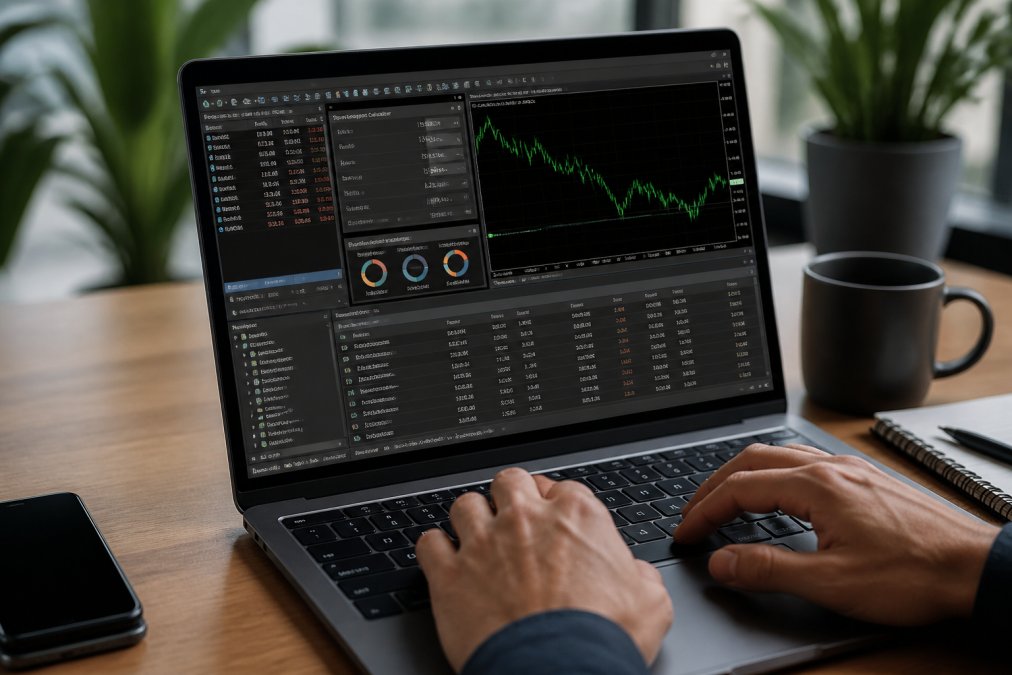
Position sizing is the foundation. Most professionals recommend risking 1-2% of account equity per trade (cftc.gov). If your account is $10,000 and you risk 2%, each trade can lose a maximum of $200. Your stop loss and position size are calculated to stay within this limit. Automated systems enforce this rule mechanically, preventing emotional overrides.
A drawdown is the peak-to-trough decline in account equity. The psychological impact of drawdown in copy trading is often underestimated. Watching someone else’s decisions cause your account to decline creates stress that manual trading doesn’t always trigger.
Capital allocation across multiple systems reduces concentration risk. Instead of running one system with 100% of capital, allocate 40% to a trend-following system, 30% to mean-reversion, and 30% to manual trading. When one system experiences a drawdown, others may be profitable, smoothing overall performance.
Stop loss placement is non-negotiable. Every automated trade should have a defined stop loss that limits maximum loss per trade. Without it, a single adverse move can wipe out weeks of gains.
Risk-to-reward ratio determines whether a strategy is worth trading. If you risk $200 to make $100, that’s poor. If you risk $100 to make $300, that’s a 1:3 ratio, much better. Automated systems should enforce minimum risk-to-reward thresholds.
Leverage amplifies both gains and losses. MT5 allows leverage up to 1:500 in some jurisdictions, but leverage beyond 1:100 is dangerous for most traders (cftc.gov). A 10% adverse move with 1:50 leverage wipes out 50% of your account (finra.org). Risk management requires using leverage conservatively, often 1:10 to 1:20 for beginners.
MT5 Trading Indicators for Beginners
MT5 indicators are mathematical calculations applied to price data that help identify trading opportunities. A handful of core indicators cover most trading scenarios.
The Moving Average smooths price action by averaging closing prices over a set period. A 20-period MA shows recent direction; a 50-period MA shows intermediate trend. When price closes above the 50-period MA, it often signals an uptrend.
The Relative Strength Index (RSI) measures momentum. RSI above 70 suggests overbought conditions; below 30 suggests oversold. Many traders use RSI to time entries, buying when RSI rises from oversold.
MACD (Moving Average Convergence Divergence) identifies trend changes. MACD crosses above its signal line when momentum accelerates upward; crosses below when momentum weakens.
Bollinger Bands measure volatility. The bands expand during volatile markets and contract during quiet periods. Price bouncing off the upper band can signal a sell; bouncing off the lower band signals a buy.
Most beginners overload charts with too many indicators, creating conflicting signals. A better approach: choose two complementary indicators, one for trend (Moving Average or MACD) and one for timing (RSI or Stochastic). This keeps analysis clear and reduces false signals.
Automated trading systems for MT5 embed these indicators into their logic. Rather than manually checking each one, the system monitors all indicators simultaneously and executes when conditions align. EZMT5’s pre-built systems have tested thousands of indicator combinations and identified the ones that work across different market conditions.
Pros and Cons: Copy Trading vs Manual Trading
Copy trading offers clear advantages for specific trader profiles. The primary benefit is time efficiency, you don’t need to spend hours analyzing charts or monitoring positions. The system handles execution, and you receive real-time trade opportunities without active involvement.
Copy trading also removes emotional decision-making from trade execution. You can’t override signals due to fear or greed. For traders struggling with emotional trading, this is invaluable.
The learning curve for copy trading is minimal. You don’t need to understand technical analysis, market psychology, or strategy design. This makes copy trading accessible to beginners.
The significant drawback is dependency on the master trader’s performance. If they make poor decisions, your account suffers. You have no control over entries, exits, or risk management. Additionally, performance fees reduce your net returns. If the master trader makes 20% but charges 20% performance fees, you keep nothing.
Manual trading places you in complete control. You decide which trades to take and how to manage each position. When you’re profitable, you keep 100% of the gains, no performance fees.
Manual trading also builds genuine trading skills. Over time, you develop intuition for market conditions, pattern recognition, and risk management.
The downside of manual trading is time commitment. Analyzing markets, identifying opportunities, and managing positions requires continuous attention. You need to monitor economic calendars, track multiple currency pairs, and make decisions quickly.
Manual trading also exposes you to emotional mistakes. Fear can cause you to exit winning trades too early. Greed can cause you to hold losing trades too long. Overconfidence can cause you to over-leverage.
Manual trading also requires skill development. You can’t succeed long-term without understanding technical analysis, fundamental analysis, and risk management. This learning period often takes months or years.
A hybrid approach combines elements of both. You might use automated trading systems for 70% of your capital while allocating 30% to manual trading where you can test your own ideas.
Which Trading Style Is Right for You?
Choosing between copy trading and manual trading depends on your specific situation. Start by honestly assessing your available time. If you work full-time and can dedicate only 30 minutes weekly to trading, copy trading makes sense. If you have flexible hours and enjoy market analysis, manual trading becomes viable.
Your experience level matters significantly. Complete beginners often struggle with manual trading because they lack foundational knowledge. Copy trading lets beginners participate while they’re learning. As skills develop, they can transition to manual trading or use both approaches.
Your emotional discipline is perhaps the most important factor. If you tend to panic-sell during downturns or chase winning trades, manual trading will likely cost you money. Copy trading removes these emotional decisions by automating execution.
Your capital size influences the choice. With smaller accounts (under $5,000), performance fees eat into returns significantly. Manual trading with lower trading costs might preserve more capital. With larger accounts ($50,000+), performance fees become less burdensome.
Your risk tolerance shapes the decision too. Copy trading lets you choose conservative master traders who risk 1-2% per trade, or aggressive traders who risk 5%+. Manual trading lets you set your own risk parameters.
Consider your learning goals. If you want to develop trading skills and understand market mechanics, manual trading forces this learning. If you simply want to participate in forex markets without becoming an expert, copy trading accomplishes this with minimal effort.
The best approach for many traders is starting with copy trading while learning manual trading skills. You gain market exposure and real-time experience while studying technical analysis and risk management. After 6-12 months, you can transition to manual trading, use both simultaneously, or continue with copy trading if it’s working.
EZMT5 serves traders pursuing both paths. The platform’s fully built and optimized MT5 trading systems work for traders using automated systems or copy trading approaches. With instant access to 11 professional systems plus all future releases, you can test different strategies without building them from scratch. The two license keys per system let you run systems across multiple accounts or devices, giving you flexibility as your trading evolves. Start trading immediately after download, receive real-time trade opportunities, and automate your trades with precision execution.
Frequently Asked Questions
Is copy trading on MT5 profitable for beginners?
Copy trading can be profitable for beginners because it removes the learning curve of technical analysis and market timing. You replicate trades from experienced signal providers, automating execution and order management. However, profitability depends on selecting a skilled master trader, understanding drawdown during losing periods, and properly configuring risk parameters. Beginners should start with smaller capital allocation and monitor performance closely before increasing exposure.
What are the primary risks of copy trading compared to manual trading?
Copy trading concentrates risk on one signal provider's strategy. If the master trader makes poor decisions, your account follows. You also have limited execution control, slippage and order delays can occur during high trading volume. Manual trading gives you full control but requires constant monitoring and emotional discipline. Both approaches face market risk, leverage risk, and drawdown periods. The key difference is whether you control decisions or delegate them.
How does risk management in automated trading differ from manual trading?
Automated trading systems enforce risk rules consistently, stop-loss levels, position sizing, and capital allocation execute the same way every time, removing emotional bias. Manual trading relies on your discipline to follow rules under pressure. Automated systems can monitor multiple currency pairs and trading volume simultaneously, while manual traders typically watch fewer positions. Both require proper portfolio diversification, leverage limits, and drawdown planning to protect capital.
Can I combine manual trading with copy trading strategies?
Yes, many traders use hybrid models. You can allocate a portion of capital to copy trading for passive income while manually trading other strategies or currency pairs. This approach lets you maintain active trading control in areas where you have edge, while automated systems handle other opportunities. Ensure your risk management accounts for total market exposure across both methods, and monitor how strategies interact during high volatility or drawdown periods.
The decision between copy trading and manual trading isn’t permanent. Many successful traders start with one approach, gain experience, and shift to another as their skills and circumstances change. What matters is choosing the approach that matches your current reality, your time, your experience, and your goals. EZMT5 provides the tools to execute either approach professionally, with systems designed for traders who want automation without guesswork and flexibility without contracts.
This article was written using GrandRanker