
Table of Contents
- Why Day Trading Software Matters
- Subscription vs. Free: Quick Comparison
- Understanding Day Trading Software Cost
- Free Day Trading Software: Strengths and Limits
- Automated Trading Software: How Subscriptions Work
- Essential Day Trading Tools and What They Cost
- Which Model Is Right for You?
- Frequently Asked Questions
Last Updated: October 10, 2026
Why Day Trading Software Matters
Day trading demands speed, precision, and the right tools. Your software choice directly affects your ability to capitalize on opportunities. At EZMT5, we provide fully optimized systems that work immediately, without weeks of setup or configuration. (Source: the critical role of real-time market data)
The difference between profitable and struggling day traders often comes down to execution quality and decision speed. Automated systems eliminate emotional mistakes and missed opportunities, providing precision entries, exits, and risk management that manual trading can’t match.
The real question isn’t whether you need software, it’s whether a subscription model or free tools better fit your trading style and capital. Both have genuine tradeoffs, and the answer depends entirely on your volume, experience level, and commitment to profitability.
Subscription vs. Free: Quick Comparison
Subscription day trading software offers real-time market data, advanced charting, automated execution, and trading journals. Free tools typically lack real-time data and limit features to basics.
Free software works well for learning and paper trading. But free platforms compromise on speed, data quality, and feature depth because real-time data, advanced analytics, and automated execution require infrastructure investment.
If you’re trading with real capital and executing multiple trades daily, subscription platforms typically pay for themselves within weeks through time and accuracy gains. If you’re testing strategies or trading small sizes, free tools work well.
| Aspect | Subscription Software | Free Software |
|---|---|---|
| Real-time market data | Included | Limited or delayed |
| Advanced charting | Full features | Basic only |
| Automated trading | Yes | Rarely |
| Trading journal/analytics | Comprehensive | Minimal or none |
| Cost | Monthly fee | Free |
| Setup time | Minutes to hours | Minutes |
| Best for | Active day traders | Beginners, paper trading |
Understanding Day Trading Software Cost
The real question isn’t whether subscription fees are expensive in isolation, it’s whether the tools generate enough edge to justify the investment through measurable trading improvements.
Break-Even Analysis: Worked Examples
Break-even depends on your trading volume and the specific edge the software provides. Here are three realistic scenarios:
Scenario 1: High-frequency day trader (10+ trades per day)
At $50/month subscription and $100 average profit per trade, break-even occurs within the first day or two of trading.
Scenario 2: Moderate day trader (3-5 trades per day)
Scenario 3: Part-time trader (1-2 trades per day, 3 days per week)
Total Cost of Ownership Beyond Subscription Price
The advertised subscription fee is only part of the real cost. Professional day traders typically incur real-time data feeds, exchange fees, hardware and internet, and add-on tools. Total infrastructure costs can add to the base subscription.
Free software trades money for your time: setup and troubleshooting (5-20 hours/month), manual order entry (30-60 minutes/day), performance tracking (2-5 hours/month), and missed opportunities from delayed data. For a day trader valuing time at $50-100/hour, this adds up to $250-2,000/month in opportunity cost, often exceeding subscription software costs.
Test whether a subscription pays for itself: track baseline performance for one month, switch to the subscription platform for one month keeping other variables constant, then compare metrics. Most active day traders find that better execution tools can improve results, covering the subscription cost.
The real cost comparison isn’t subscription price versus free, it’s total cost of ownership (subscription + hardware + data feeds + your time managing limitations) versus profit generated from better execution, faster decision-making, and automated systems that don’t miss opportunities. For active day traders, this calculation almost always favors subscription platforms within the first month of trading.
Free Day Trading Software: Strengths and Limits
Free platforms excel for learning, testing strategies, and paper trading. Many brokers offer free charting and basic tools; TradingView’s free tier provides solid charting with community-shared indicators.
Free software’s strength is accessibility: new traders can learn market structure and practice order entry without spending money, and paper trading teaches execution discipline risk-free.
Free platforms hit limits with real capital: they delay market data by 15-20 minutes (impossible for real-time day trading), lack professional-grade execution, offer no automation, and provide minimal trading journals.
Real-time data, professional-grade routing, and automated execution require infrastructure investment that free software can’t afford without a revenue model.
For day trading, free software hits a hard ceiling: you can learn and paper trade, but executing real-time trades with precision and speed requires professional-grade tools.
Automated Trading Software: How Subscriptions Work
Automated trading removes emotion and execution delays by monitoring conditions and executing trades according to preset rules, where subscription platforms excel.
EZMT5 delivers fully built, optimized MT5 trading systems and TradingView indicators. Download, configure on your broker account, and they execute trades automatically with precision that manual trading can’t match.
Subscription automation platforms offer pre-built systems tested across market conditions, real-time execution, built-in risk management, performance tracking, and regular updates.
The advantage is immediate deployment: download, configure, and trade without building systems from scratch or learning programming.
The subscription model provides continuous improvement: new systems and updates adapt to changing market conditions without static software limitations.
Automated systems work best when you understand the underlying logic and can monitor performance. Set-and-forget trading is risky. Even the best systems need periodic review and market-condition assessment.
Essential Day Trading Tools and What They Cost
Professional day traders typically use multiple tools: real-time charting, order execution, market scanning, and performance analysis. Understanding costs helps you decide between bundled subscriptions or à la carte approaches.
Core Tools and Typical Pricing
Real-Time Charting and Technical Analysis
- TradingView Premium: $15/month (real-time data, advanced charting, custom indicators, alerts)
- StockCharts: $20-40/month depending on tier (professional-grade technical analysis, screening, alerts)
- Thinkorswim (TD Ameritrade): Free with account (excellent charting, real-time data, but tied to one broker)
- Interactive Brokers Trader Workstation: Free with account (professional-grade but steep learning curve)
Market Scanning and Opportunity Detection
- Trade Ideas: $99-199/month (AI-powered stock scanner, real-time alerts, backtesting)
- FinViz Elite: $40/month (stock screener, heatmaps, alerts, backtesting)
- Thinkorswim Scan: Free with TD Ameritrade account (basic scanning built into platform)
Trading Journal and Performance Analytics
- TradesViz: $20-50/month depending on tier (detailed trade logging, performance metrics, pattern analysis)
- Edgewonk: $30-60/month (journal, statistics, psychology tracking)
- Spreadsheet-based tracking: Free but requires 5-10 hours per month of manual data entry
Order Execution and Broker Access
- Interactive Brokers: $0-10/month (depending on account size; $0 commission on stocks, $1 per contract on futures)
- TD Ameritrade: Free account with Thinkorswim platform; $0 commission on stocks and options
- Tastytrade: Free account; $1 per contract on options, $0.50 per contract on futures
- Webull: Free account; $0 commission on stocks and options
Bundled Subscription Platforms (combining multiple functions)
- Bundled systems + charting + execution: $50-150/month (varies by platform; typically includes pre-built trading systems, real-time charting, automated execution, and performance tracking)
Comparing Total Cost: À La Carte vs. Bundled
À La Carte Example: TradingView ($15) + Trade Ideas ($99) + TradesViz ($30) + Interactive Brokers ($5) = $149/month. Advantage: best-in-class tools. Disadvantage: poor integration, manual data transfer, higher complexity.
Bundled Example: All-in-one platform = $75/month. Advantage: integrated, faster setup, lower cost. Disadvantage: less flexibility, constrained tools.
Decision Framework by Trader Profile
Feature Overlap and Redundancy Pitfalls
When building an à la carte toolkit, avoid feature overlap: don’t pay for duplicate charting, scanning, or journaling unless you need specific features. Your broker provides execution; pay extra only for multi-broker routing or advanced order types.
Real-Time Data Costs: A Hidden Expense
Real-time market data is not free. Exchanges charge for it, and those costs are passed to traders:
- Stocks (Level 1 quotes): Often bundled free with broker accounts; some platforms charge $10-20/month
- Stocks (Level 2 quotes and time-and-sales): $20-50/month (shows order book depth; useful for day traders)
- Options data: $10-30/month (separate from stock data on some platforms)
- Futures data: $10-30/month per exchange (CME, CBOE, etc.)
Bundled subscription platforms typically include real-time data in their monthly fee. À la carte platforms often charge separately, which can add to your total cost.
Before committing to any tool, test it during a free trial (most platforms offer 7-30 days). Track whether the tool actually changes your trading decisions or execution quality. If you can’t measure a benefit, it’s not worth the cost.
Which Model Is Right for You?
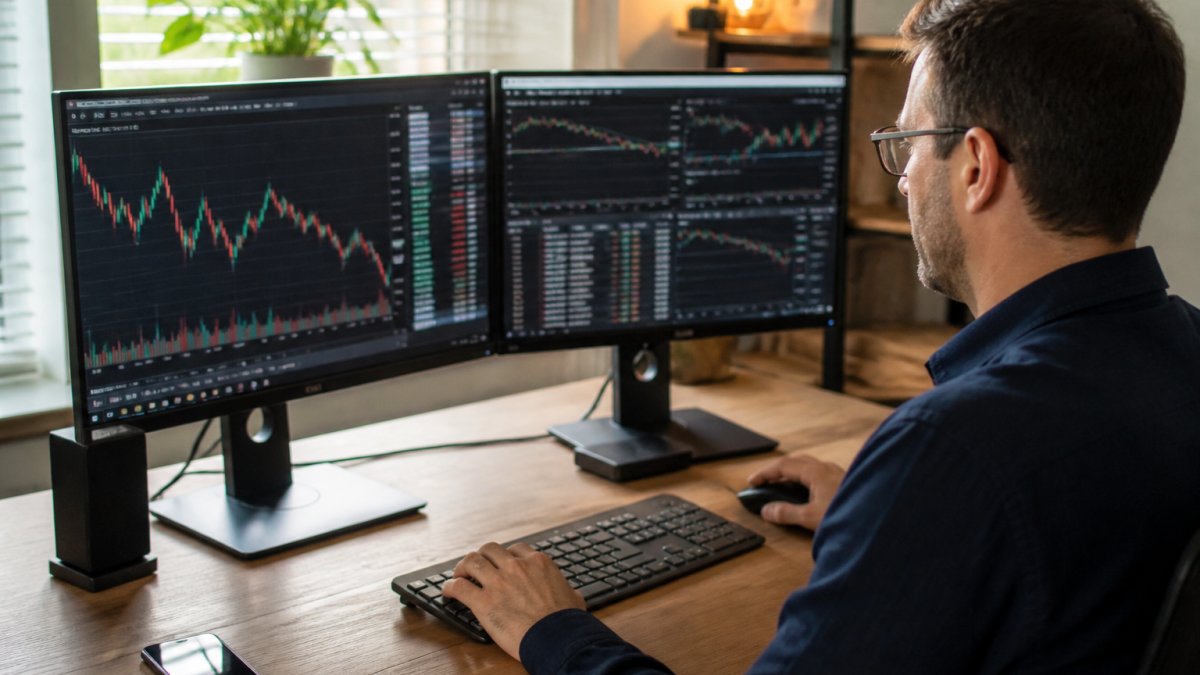
The subscription versus free choice depends on your trading profile, capital, and time commitment.
Choose subscription day trading software if:
- You’re trading real capital with multiple trades per day
- You need real-time market data and execution speed
- You want automated systems handling trades while you monitor
- You value consistency and professional-grade tools over cost minimization
- You’re serious about trading as income, not a hobby
Choose free software if:
- You’re learning and paper trading without real capital
- You trade infrequently or with small position sizes
- You have time to work around tool limitations
- Your primary goal is education, not profit
- You want to test ideas before committing financially
The middle ground, traders with modest capital, occasional real trades, and limited time, often benefit most from subscription platforms.
EZMT5 serves serious traders who need immediate, professional-grade execution. Our 11 fully optimized MT5 trading systems and TradingView indicators give you tested strategies ready to deploy, plus all future systems included in your subscription.
For traders building custom strategies or preferring complete control over system design, assembling individual tools makes sense despite higher total cost. For traders who want proven systems with professional execution, subscription platforms deliver faster results and lower setup burden.
The cost question resolves itself once you measure your actual trading performance. Better execution and faster decision-making generate measurable profit improvement.
The gap between profitable and struggling day traders often comes down to execution quality, not market insight. Free tools teach you the basics. EZMT5 delivers that advantage through fully optimized trading systems ready to deploy immediately. Get started with EZMT5 and access professional-grade automated trading without the complexity or cost of building systems from scratch.
Frequently Asked Questions
Is monthly subscription software worth it for day traders?
It depends on your trading volume and strategy complexity. Monthly subscriptions provide access to real-time data, charting tools, and automated trading software that free alternatives often lack. If you trade frequently and rely on technical analysis or automated order execution, the cost of a subscription typically pays for itself through better entry and exit timing. However, if you trade occasionally or use simple strategies, free day trading software may be sufficient. Calculate your break-even point by comparing subscription costs against potential gains from improved trade execution.
What’s the real difference between paying monthly for day trading software versus buying systems outright?
Monthly subscriptions provide ongoing access to updates, new features, and new trading systems as they’re released, with no long-term commitment. Buying systems outright means you own them permanently but receive no future updates or new systems. Subscription models work better for traders who want flexibility to change strategies, access multiple systems, and benefit from continuous improvement. One-time purchases suit traders who have found a strategy that works and don’t need new tools. Consider total cost of ownership over time: a subscription that includes all future systems may cost less than buying individual systems separately.
Can I actually use free day trading software and still be profitable?
Free day trading software can support profitability if you have a solid trading strategy and discipline. Free platforms typically offer charting, basic technical analysis, and order execution through a broker. However, free tools often lack advanced features like real-time market data, automated trading, stock signals, and trade analytics that paid software provides. Many successful traders use a mix: free charting for analysis and a paid subscription for automated execution or advanced tools. The limiting factor is usually not the software price but the trader’s strategy, risk management, and emotional discipline.
How do I know if a trading system subscription actually works in live market conditions?
Look for systems with documented backtesting results and, ideally, live trading performance data. Backtesting shows how a system performed historically, but live market conditions differ. Ask the provider for details on win rate, average profit per trade, and maximum drawdown in real trading. Check if the system includes paper trading or simulator access so you can test it risk-free before committing real capital. Be skeptical of claims that seem too good to be true. Reputable providers are transparent about both strengths and limitations.
What should I budget for day trading software annually?
Costs vary widely based on your needs. Basic charting and market data subscriptions have varying costs, while comprehensive platforms with automated trading, advanced analytics, and multiple systems can cost more. Trading journals and performance analytics tools range from free to subscription-based. Calculate your annual cost by adding software subscriptions, broker commissions, and any data feeds. Then compare that against your expected trading profit. If your monthly trading profit exceeds your monthly software costs, the subscription pays for itself. Many traders find that the right tools improve profitability enough to offset the subscription expense.