

Table of Contents
- What Makes a No Contract MT5 Trading Solution Worth Using
- No Contract MT5 Trading Solutions Compared: Full Breakdown
- MT5 Account Types Comparison: Which Structure Fits Your Strategy
- Flexible MT5 Algorithmic Trading: EAs, APIs, and Automation Without Contracts
- MT5 Copy Trading Platforms With No Lock-In: What to Look For
- MT5 Prop Firm Challenges With No Contract: Navigating the Landscape
- Security, Compliance, and Latency: The Angles Most Comparisons Miss
- Conclusion
Last Updated: June 8, 2026
Traders searching for flexible automated trading tools are increasingly choosing no contract MT5 trading solutions over locked-in broker arrangements. At EZMT5, we’ve tracked this shift closely: demand for month-to-month access to professional-grade MetaTrader 5 systems has grown sharply as traders realize that long-term contracts rarely benefit the person signing them. Below, we’ll show you exactly how to evaluate, compare, and choose the right flexible MT5 setup for your strategy in 2026, covering ECN brokers, algorithmic trading infrastructure, prop firm access, and security considerations most comparison articles skip.
Here’s what most guides get wrong: they treat "no contract" as a minor feature rather than a structural advantage. The ability to cancel anytime changes how you allocate capital, test strategies, and respond to market conditions.
What Makes a No Contract MT5 Trading Solution Worth Using
A no contract MT5 trading solution is any MetaTrader 5-compatible service, broker, or system that operates on a month-to-month or cancel-anytime basis, with no minimum commitment period, termination fees, or lock-in clauses. Not all flexible arrangements are equal, a broker advertising "no contract" while requiring a $10,000 minimum deposit and a 90-day withdrawal hold is not actually flexible.
Key Features to Demand Before Signing Up
Before committing to any MT5 platform or trading system, verify these non-negotiables:
- True cancel-anytime policy: No exit fees, no notice periods longer than one billing cycle
- Immediate access: Systems, EAs, and indicators should be available right after signup
- Portable license keys: License keys you can reassign to different broker accounts as your strategy evolves
- Multi-asset capability: The platform should cover Forex, CFDs, Futures, and Stocks
- Transparent spread and commission structure: ECN accounts with raw spreads are preferable for active strategies
One practical check: read the terms of service for the phrase "minimum term." If it appears anywhere near the pricing section, you’re not looking at a genuinely flexible solution.
Many brokers advertise “no contract” but bury minimum deposit lock-up periods in their withdrawal policy. Always check the withdrawal terms, not just the account opening terms. Failing to do this has caught experienced traders off guard.
No Contract MT5 Trading Solutions Compared: Full Breakdown
The market for flexible MT5 access has matured significantly. Here’s how the leading options stack up across the dimensions that actually matter.

| Solution | Best For | Contract Terms | Key Differentiator |
|---|---|---|---|
| EZMT5 | Automated system traders | Month-to-month, cancel anytime | 11 built systems + all future releases |
| IC Markets | ECN/algorithmic traders | No lock-in | Raw ECN spreads from 0.0 pips |
| Pepperstone | Speed-sensitive strategies | No lock-in | Ultra-low latency execution |
| Traders Connect | Multi-account copy trading | Monthly subscription | 20ms copy execution, cancel anytime |
| AMP Futures | Futures specialists | No lock-in | DMA to futures exchanges |
EZMT5: Instant Access to 11 Optimized MT5 Systems
The strongest argument for EZMT5 is the elimination of the setup problem entirely. Most traders who want automated MT5 strategies must either spend months building Expert Advisors or pay a developer and hope the system survives live conditions. EZMT5 removes that bottleneck: subscribers get immediate, unlimited access to 11 professional, fully built, and optimized MT5 Trading Systems plus TradingView indicators, with every future system included at no additional cost.
The two reassignable license keys per system are worth highlighting. Most EA providers lock a license to a single broker account. EZMT5 lets you reassign keys anytime, so you can switch brokers, test on a demo account simultaneously, or move to a different MT5 environment without repurchasing. Combined with the no-contract monthly subscription, this is the most genuinely flexible automated trading arrangement currently available.
Pros: Pre-built and optimized systems ready immediately after download; includes all future trading systems; two reassignable license keys per system; real-time trade opportunities; cancel anytime.
Cons: Requires a compatible MT5 broker account (not a standalone broker).
If you’re new to automated MT5 trading, start with EZMT5’s pre-built systems on a demo account for two to four weeks before going live. The systems are ready immediately, but understanding how each one behaves across different market conditions will sharpen your execution decisions.
IC Markets and Pepperstone: ECN Brokers With No Lock-In
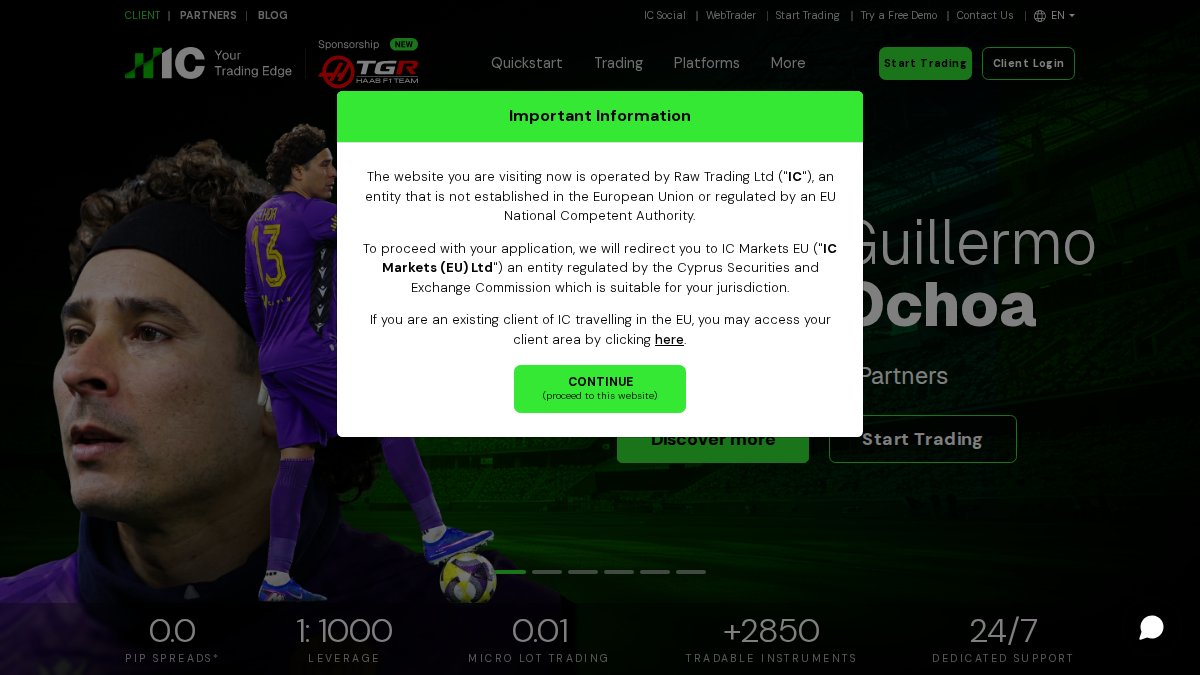
ECN execution without a dealing desk is the baseline requirement for any serious algorithmic or high-frequency strategy. IC Markets delivers raw spreads from 0.0 pips with deep liquidity pools and no NDD intervention. The $200 minimum deposit is higher than some retail alternatives, but execution quality justifies it for active traders running EAs or scalping strategies. Pepperstone operates with a $0 minimum deposit and ultra-low latency infrastructure, making it the better choice when execution speed is the primary variable.
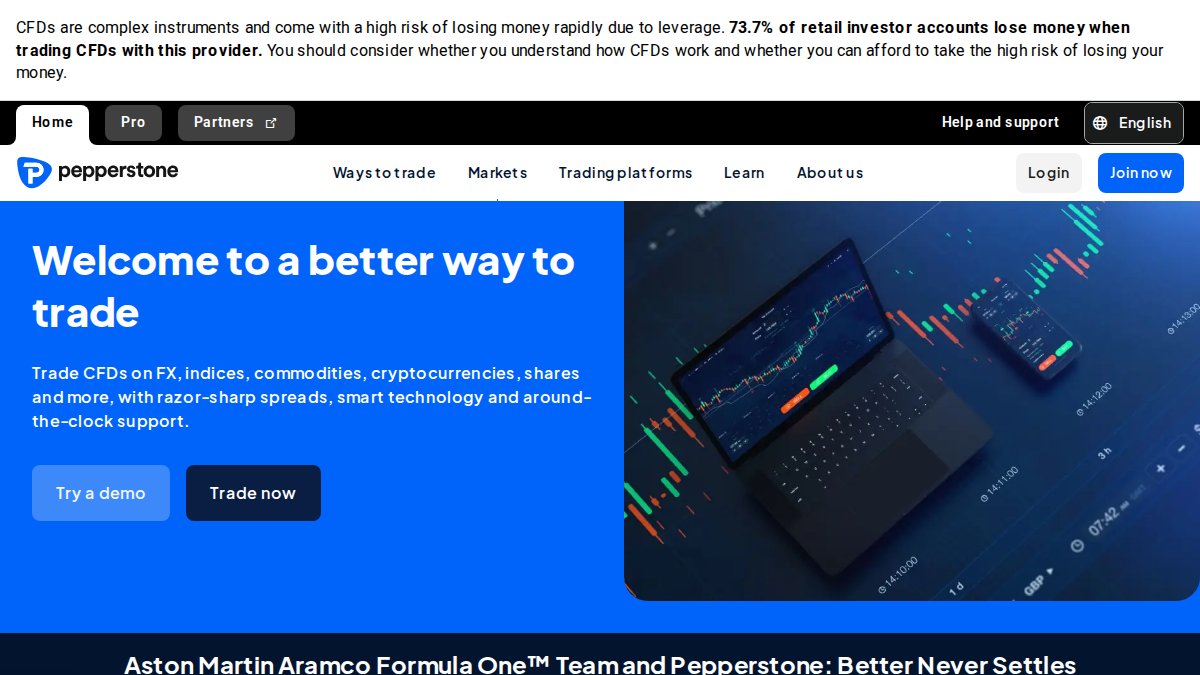
IC Markets pros: High-speed execution suitable for HFT; strong regulatory standing.
IC Markets cons: Higher minimum deposit than retail-focused brokers.
Pepperstone pros: Excellent customer service; fast, reliable platform performance.
Pepperstone cons: Limited research tools compared to some competitors.
Traders Connect: Copy Trading Without Commitment
Copy trading infrastructure is where contract terms matter most, because signal providers change, strategies drift, and you need to exit cleanly. Traders Connect solves this with a $10/month subscription, no setup fees, and a cancel-anytime policy.
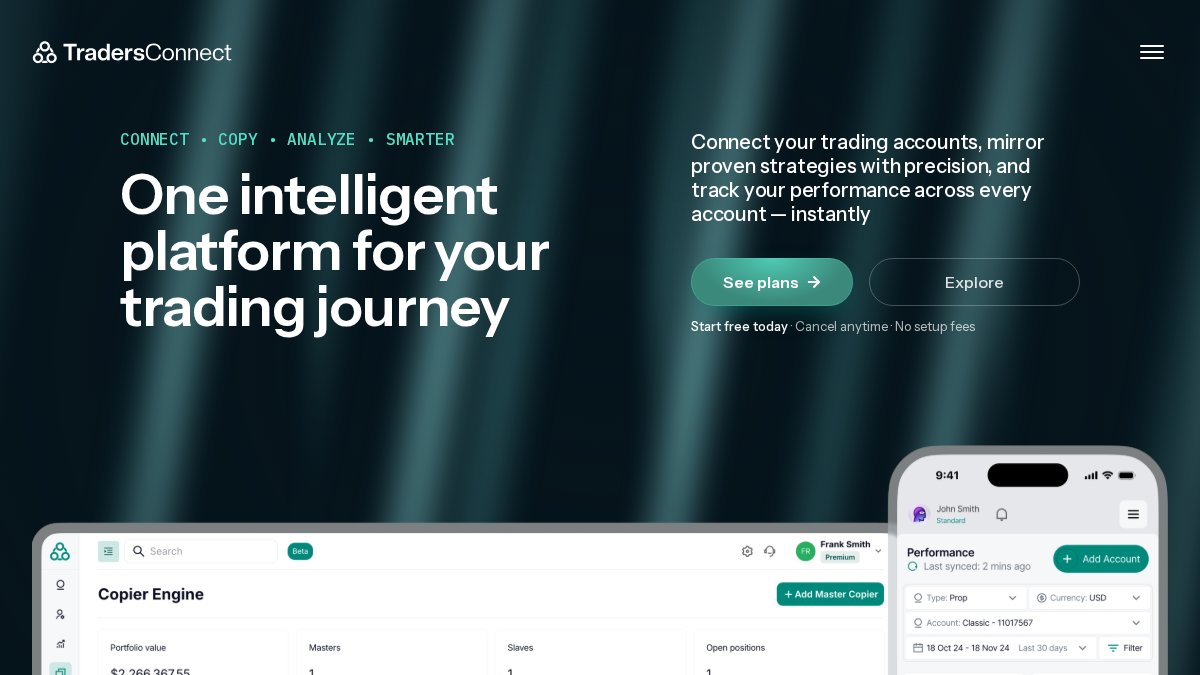
The platform mirrors trading strategies across multiple accounts with an average copy execution speed of 20ms, competitive for retail-grade copy infrastructure. Advanced analytics covering ROI, win rate, and drawdown let you evaluate signal quality before committing real capital.
Pros: No long-term lock-in; detailed performance analytics; low entry cost.
Cons: Adds a monthly cost on top of broker fees, which compounds if you’re already paying for trading systems.
AMP Futures: Low-Latency Futures Access on MT5
AMP Futures serves professional futures and commodities traders who need direct market access to exchanges rather than CFD proxies. DMA execution, support for CQG and Rithmic data feeds, and per-contract commission pricing make this the right tool for traders interacting with actual futures markets.
Pros: Elite-level execution speed; specialized futures market access.
Cons: Not suitable for Forex or CFD-focused strategies.
MT5 Account Types Comparison: Which Structure Fits Your Strategy
Account structure is a decision most traders make once and rarely revisit, a mistake, because the wrong account type can cost significantly in spread, commission, or execution quality over time.
ECN, Standard, and PAMM/MAM Accounts Explained
ECN accounts connect traders directly to liquidity providers with raw spreads and a per-trade commission, optimal for algorithmic trading, scalping, and any spread-sensitive strategy.
Standard accounts embed broker profit into the spread, eliminating per-trade commissions. Simpler to manage but more expensive for high-frequency strategies.
PAMM (Percentage Allocation Management Module) and MAM (Multi-Account Manager) accounts allow a single trader to manage multiple sub-accounts simultaneously, with trades allocated proportionally, the standard structure for fund managers and signal providers at scale.
For traders running EZMT5 systems across multiple accounts, a MAM structure at an ECN broker gives the best combination of cost efficiency and execution quality.
Hedging vs Netting: Choosing the Right Order Accounting Mode
Hedging mode allows multiple open positions in the same instrument simultaneously, including opposing positions. This is the default for Forex and CFD brokers outside the US and is essential for strategies using partial position management or simultaneous long/short signals.
Netting mode maintains a single net position per instrument, opening a trade in the opposite direction reduces or closes the existing position. This is standard for futures exchanges and required by some regulatory frameworks.
The practical implication: if your MT5 Expert Advisor uses hedging logic, confirm your broker supports hedging mode before deploying live. Running a hedging EA on a netting account produces incorrect behavior that can generate unexpected losses.
Flexible MT5 Algorithmic Trading: EAs, APIs, and Automation Without Contracts
Algorithmic trading on MT5 is where the platform’s architecture genuinely separates it from MT4 and most competitors. MetaTrader 5 supports multi-threaded execution, a built-in strategy tester with real tick data, and direct API connectivity via MQL5.
According to MetaQuotes official MT5 documentation, MT5’s strategy tester supports multi-currency testing across correlated instruments simultaneously, a capability MT4’s single-currency tester cannot replicate.
Order Execution Modes and Market Depth on MT5
MT5 supports four order execution modes: instant execution, request execution, market execution, and exchange execution. For algorithmic strategies, market execution is standard, guaranteeing fill at the best available price without requote confirmation.
Market depth (Level II data) is available natively in MT5, showing the full order book with bid/ask volumes at each price level, critical for order flow strategies and assessing liquidity before large orders.
Pending order types include: Buy Limit, Sell Limit, Buy Stop, Buy Stop Limit, Sell Stop, and Sell Stop Limit. The addition of Stop Limit orders compared to MT4 gives algorithmic traders more precise entry control without custom EA logic.
MT5’s native Stop Limit order type eliminates the custom EA workarounds MT4 traders relied on for years. If your strategy requires conditional pending orders, MT5 handles this at the platform level, reducing EA complexity and execution risk.
MT5 Copy Trading Platforms With No Lock-In: What to Look For
MT5 copy trading platforms with no lock-in replicate trades from a master account to subscriber accounts in real time, without requiring multi-month subscriptions or termination fees.
Execution latency is the primary technical variable. A copy delay of 200ms or more on a fast-moving Forex pair can produce materially different fills between master and subscriber accounts, particularly during news events. Traders Connect’s 20ms average latency is competitive; anything above 100ms warrants scrutiny.
Secondary criteria include:
- Drawdown controls: Can subscribers set maximum drawdown limits that automatically pause copying?
- Lot size scaling: Does the platform scale position sizes proportionally to subscriber account equity?
- Instrument filtering: Can subscribers exclude specific instruments from being copied?
- Analytics transparency: Are historical performance metrics audited or self-reported?
As documented in ESMA’s guidelines on copy trading disclosure requirements, regulated copy trading services in the EU must disclose historical performance data and risk warnings. Verify that any platform you use meets the regulatory standards applicable to your jurisdiction.
MT5 Prop Firm Challenges With No Contract: Navigating the Landscape
The prop firm landscape for MT5 is genuinely complicated. Many firms offer no-contract evaluation phases, but funded account agreements often include performance targets, maximum drawdown rules, and payout schedules that function as de facto lock-in mechanisms.
The practical distinction is between the evaluation phase and the funded phase. Evaluation phases are typically month-to-month or one-time fee structures; funded account agreements are where terms become restrictive.
Key questions to ask any MT5 prop firm before starting a challenge:
- Is the evaluation fee refundable upon passing?
- What are the maximum daily and total drawdown limits on the funded account?
- Are there restrictions on which EAs or trading systems can be used?
- Can you trade during major news events?
Many prop firms explicitly prohibit certain EA types, particularly those exploiting latency arbitrage or grid trading strategies. If you’re planning to use EZMT5 systems in a prop firm environment, confirm the firm’s rules permit automated trading before paying the challenge fee.
Security, Compliance, and Latency: The Angles Most Comparisons Miss
Most MT5 comparison articles stop at features and pricing. Security, regulatory compliance, and latency are where real differentiation between solutions becomes visible.

Data Privacy and Security for Independent MT5 Traders
Independent traders running automated systems face a specific security profile. EA logic, trading history, and account credentials are valuable targets. According to CISA’s cybersecurity guidance for financial services, financial services accounts are among the most frequently targeted by credential-stuffing attacks.
Practical security measures for MT5 traders:
- Use a dedicated VPS for EA deployment. MetaQuotes Virtual Hosting provides direct MT5 integration at approximately $15/month with 24/7 uptime.
- Enable two-factor authentication on all broker accounts.
- Never store live account credentials in EA configuration files in plain text.
- Separate trading capital across multiple accounts to limit single-point-of-failure exposure.
Execution Speed Benchmarks and White-Label vs Proprietary MT5 Setups
The latency difference between a white-label MT5 deployment and proprietary broker infrastructure is significant in practice. White-label setups use standard MetaQuotes server infrastructure with a broker’s branding applied; proprietary setups involve the broker operating their own MT5 servers, often co-located in financial data centers. The latency difference can range from a few milliseconds to tens of milliseconds, material for scalping and HFT strategies.
For swing and position traders, white-label infrastructure is adequate and often comes with lower spreads. For scalpers and algorithmic traders where fill quality directly determines profitability, proprietary co-located infrastructure is worth the typically higher minimum deposit. IC Markets and Pepperstone both operate proprietary infrastructure with co-location in major financial data centers, a meaningful advantage for latency-sensitive strategies. Flexibility in contract terms is valuable, but it doesn’t compensate for poor execution quality.
The real challenge for most traders isn’t finding an MT5 platform, it’s finding professional-grade automated systems ready to deploy without months of development time. EZMT5 addresses this directly: instant access to 11 fully built and optimized MT5 Trading Systems, two reassignable license keys per system, real-time trade opportunities, and a no-contract monthly subscription you can cancel anytime. For traders who want to start executing like a professional without building from scratch, get started with EZMT5 and begin trading immediately after download.
Frequently Asked Questions
Are there MT5 trading platforms that do not require long-term contracts?
Yes. Several no contract MT5 trading solutions exist across both broker and software categories. EZMT5 offers a cancel-anytime monthly subscription with access to 11 professional MT5 trading systems. On the broker side, platforms like IC Markets, Pepperstone, Exness, and BlackBull Markets impose no lock-in periods, you can open and close accounts freely. The key is to verify cancellation terms before committing, even to a monthly plan.
Can I use MT5 for algorithmic trading without a contract?
Absolutely. Flexible MT5 algorithmic trading is one of the platform's strongest use cases. MetaTrader 5 natively supports Expert Advisors (EAs), API trading, and trading robots that run on your chosen broker's server or via a VPS. Services like EZMT5 deliver fully built and optimized MT5 systems on a no-contract monthly basis, meaning you can automate your trades with precision execution and cancel anytime without penalty.
Do prop firms offer no-contract MT5 trading accounts for challenges?
Many prop firms now structure their MT5 prop firm challenges without long-term contracts, you pay a one-time challenge fee and, if funded, trade under defined rules. However, terms vary widely. Some firms require monthly subscriptions for dashboard access post-funding. Always read the funded account agreement carefully. Look for firms that explicitly state no recurring fees or lock-in clauses beyond the initial challenge payment.
How do I choose a flexible MT5 broker without lock-in periods?
When evaluating no contract MT5 trading solutions, check four things: whether the broker charges inactivity fees, whether withdrawals are unrestricted, whether EA and algorithmic trading is fully permitted, and whether the account type (ECN, Standard, or PAMM/MAM) matches your strategy. Brokers like Pepperstone, Exness, and BlackBull Markets have zero minimum deposit requirements and no mandatory holding periods, making them strong starting points for flexible traders.
What is the difference between MT5 copy trading platforms with no lock-in versus PAMM accounts?
MT5 copy trading platforms with no lock-in, such as Traders Connect, mirror trades in near real-time across multiple accounts on a monthly subscription you can cancel anytime. PAMM and MAM accounts, by contrast, pool investor capital under a single manager and often involve formal agreements with defined withdrawal windows. For maximum flexibility, a standalone copy trading tool on a month-to-month basis typically offers fewer restrictions than a managed PAMM arrangement.
Is it possible to cancel an MT5 trading subscription at any time?
With the right provider, yes. EZMT5 is built specifically around a no-contract monthly subscription model, cancel anytime with no penalties. Similarly, broker accounts on platforms like IC Markets or Exness have no mandatory term. The critical distinction is between software subscriptions (EAs, signal services) and broker accounts: both can be structured without lock-in, but you must confirm cancellation and refund policies explicitly before subscribing to any MT5 trading solution.
This article was written using GrandRanker