

Table of Contents
- How Automated Trading Systems Work for Busy Professionals
- Best Automated Trading Platforms for Beginners and Experienced Traders
- Backtesting, Strategy Optimization, and Real-World Performance
- Automated Trading Bot Risks and How to Mitigate Them
- SEC Regulations for Automated Trading and Legal Compliance
- Algorithmic Trading Strategies for Stocks and Diversified Assets
- Building Your First Automated Trading System: VPS, API Integration, and Security
- Conclusion: Making Automated Trading Work for Your Schedule
Last Updated: August 7, 2026
How Automated Trading Systems Work for Busy Professionals
Automated trading removes the need to monitor markets constantly. You set predetermined criteria, entry points, exit signals, and position sizes, then let the system execute trades automatically when conditions are met.
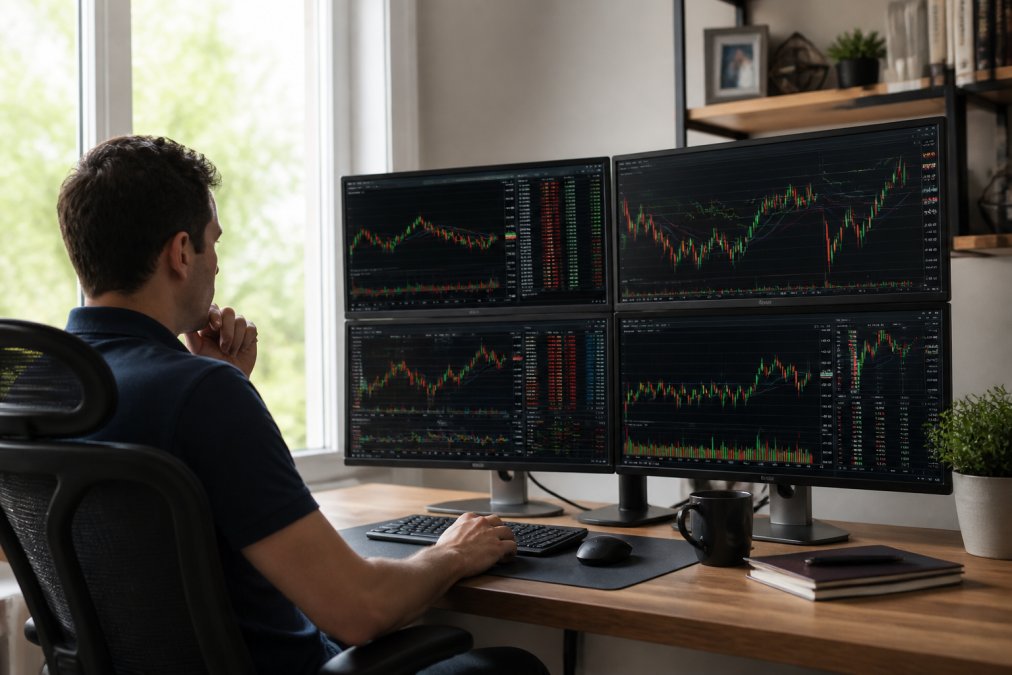
Your trading system connects to your broker’s API, continuously scans market conditions, and fires buy or sell orders without human intervention, in milliseconds. While you’re in meetings, sleeping, or handling other responsibilities, your positions are managed according to rules you’ve already defined.
Manual trading demands constant attention and emotional discipline. Automated systems eliminate these friction points by enforcing discipline through code. Execution speed matters: latency can mean the difference between a profitable fill and slippage that erodes your edge. Cloud-based VPS deployment and direct API connections minimize delay.
The real advantage isn’t just automation, it’s consistency. Your system trades the same way every single time, regardless of market conditions or your mood. This consistency compounds over months and years.
Best Automated Trading Platforms for Beginners and Experienced Traders
Choosing the right platform depends on your technical comfort level, asset class, and budget.
MetaTrader 5 (MT5) remains the industry standard for retail traders. The built-in Expert Advisor editor lets you create automated strategies using MQL5 language, or download pre-built systems from the MQL5 marketplace. MT5 handles stocks, forex, futures, and cryptocurrencies. The ecosystem is mature with thousands of existing systems and indicators.
EZMT5 provides a shortcut. Instead of building from scratch, you get instant access to 11 professionally built and optimized MT5 trading systems, plus all future systems included in your subscription. Each system comes with two license keys you can change anytime. No contracts, cancel whenever you want. This matters for busy professionals who need to start immediately.
TradingView has become increasingly powerful for automated trading. Pine Script lets you build strategies and backtest them directly in the charting interface. Integration with brokers like Interactive Brokers and Alpaca enables live automated execution. Strength: a large community with thousands of published strategies. Weakness: execution quality depends entirely on your broker connection.
Interactive Brokers appeals to serious traders needing professional-grade tools. The API is strong and well-documented. You can build systems in Python, C++, or Java. Downside: steep learning curve and minimum account sizes.
Alpaca targets developers and algorithmic traders. The API is clean and modern. Paper trading is unlimited and free. Commissions are zero for stocks and ETFs. Limitation: only supports US equities and crypto, no forex or futures.
| Platform | Best For | Technical Barrier | Asset Classes | Automation Method |
|---|---|---|---|---|
| MT5 | Forex, futures, crypto traders | Moderate (MQL5 language) | Stocks, forex, futures, crypto | Expert Advisors or pre-built systems |
| TradingView | Chart-focused traders, community learners | Low to moderate (Pine Script) | Stocks, crypto, forex | Pine Script strategies + broker API |
| Interactive Brokers | Professional traders, high-volume trading | High (multiple API languages) | Stocks, options, futures, forex, bonds | Custom API integration |
| Alpaca | Stock traders, Python developers | Low to moderate (Python API) | US stocks, crypto | Python SDK or REST API |
| EZMT5 | Professionals wanting immediate execution | Very low (pre-built systems) | MT5-compatible assets | Download and deploy |
For most busy professionals, MT5-based systems strike the best balance between capability and setup time. EZMT5 eliminates setup friction entirely by providing battle-tested systems you can deploy immediately.
Backtesting, Strategy Optimization, and Real-World Performance
Backtesting is where most traders get into trouble. A strategy that looks incredible on historical data often fails in live markets.
The problem is overfitting. When you tweak parameters to squeeze every last percentage point out of historical data, you’re often just fitting noise. Your "perfect" parameters are fragile and won’t work on future data.
Real backtesting requires: (1) out-of-sample testing, split historical data into training and test periods; your strategy must perform well on data it’s never seen before. (2) Test across multiple market conditions: bull markets, bear markets, high-volatility and low-volatility periods. (3) Account for real-world friction: slippage, commissions, spreads, and execution delays. If your strategy is still profitable after accounting for realistic costs, you might have something real.
Many traders skip this discipline and jump to live trading after seeing great backtest numbers. Then they lose money in their first week when drawdown hits harder than expected. They panic and turn off the system.
Strategy optimization is ongoing. Markets change. What worked last year might not work this year. Serious traders review systems quarterly or semi-annually, adjusting parameters based on recent live performance.
The biggest mistake is trusting a backtest more than live results. A strategy that backtests at 40% annual returns but has only three weeks of live trading history is a liability, not an asset. Start small, prove the system works in real markets first, then scale.
Automated Trading Bot Risks and How to Mitigate Them
Automated trading bots eliminate emotion but introduce new risks.
Execution risk: Your system might encounter slippage, requotes, or rejected orders in live markets. Market gaps overnight can trigger stop-losses at terrible prices. Mitigation: Start with liquid assets, trade during hours with tight spreads, use limit orders when possible, and set hard position size limits.
Algorithmic bias: Your system might work well on specific assets or timeframes but fail when market conditions shift. A momentum strategy crushes it in trending markets but gets destroyed in mean-reversion environments. Mitigation: Test across multiple market regimes, use diversification with multiple uncorrelated strategies, and monitor live performance weekly.
Leverage and margin risk: Leverage amplifies both wins and losses. Many traders use leverage thinking "I’ll just be careful," then a flash crash wipes them out in minutes. Mitigation: Risk no more than 1-2% of your account on any single trade. If using leverage, cut position sizes in half.
API and connection failures: Your broker’s API goes down or your VPS loses internet. You’re stuck holding trades with no ability to manage risk. Mitigation: Use a reliable VPS provider with redundancy, test connections regularly, set hard stop-losses in your broker’s system (not just in code), and have a manual backup plan.
Security vulnerabilities: If someone gains access to your API keys, they can trade your account without permission. Mitigation: Use read-only API keys for data feeds, restrict write access to a separate key with limited permissions, store API keys in environment variables, use strong passwords and two-factor authentication, keep your VPS patched, and run it behind a firewall.
SEC Regulations for Automated Trading and Legal Compliance
The SEC has specific rules about automated trading.
Pattern Day Trader (PDT) rules apply if you trade US stocks. If you make four or more day trades in a rolling five-business-day period, you’re classified as a pattern day trader and must maintain minimum equity of $25,000. Your automated system can easily trigger this classification. Solution: either maintain $25,000+ in your account or trade longer timeframes.
Market manipulation rules prohibit spoofing, layering, and deceptive practices. Your system must not place orders with intent to cancel them or create false market impression.
Regulation SHO governs short selling. You can’t short a stock unless shares are available to borrow. Your system must check borrow availability before shorting.
Dodd-Frank Act requires algorithmic traders to register with the SEC if they meet certain thresholds. For individual traders trading their own accounts, this rarely applies. If managing other people’s money, compliance becomes mandatory.
The safest approach: trade your own account, use reasonable position sizes, avoid obvious market manipulation, and keep detailed records of your system’s logic and performance.
Algorithmic Trading Strategies for Stocks and Diversified Assets
Algorithmic trading strategies fall into a few broad categories.
Trend-following strategies assume assets in motion tend to stay in motion. They identify uptrends and downtrends, then enter in the direction of the trend and exit when it reverses. These work well in strongly trending markets but get whipsawed in range-bound markets. A simple trend-follower might buy when the 50-day moving average crosses above the 200-day moving average.
Mean reversion strategies assume prices that deviate sharply from historical averages tend to snap back. If a stock is trading 3 standard deviations below its 20-day average, it’s oversold and likely to bounce. These work well in range-bound markets but get destroyed in strong trends.
Momentum strategies ride the strength of price moves, expecting winners to keep winning. They work well in volatile markets with short timeframes but can reverse quickly.
Statistical arbitrage exploits temporary mispricings between related assets. If two stocks usually move together but diverge, you might short the outperformer and long the underperformer, expecting convergence. These are market-neutral but require sophisticated analysis.
Sector rotation strategies move capital between sectors based on relative strength. When tech outperforms, you overweight tech. These force diversification and reduce concentration risk.
The best strategy depends on your timeframe, risk tolerance, and available capital. Day trading requires active monitoring. Swing trading (holding overnight or a few days) is more forgiving. Position trading (holding weeks or months) requires patience but less constant attention.
Building Your First Automated Trading System: VPS, API Integration, and Security
Building a live automated trading system requires three components: a trading platform, a VPS to run it on, and secure API credentials.
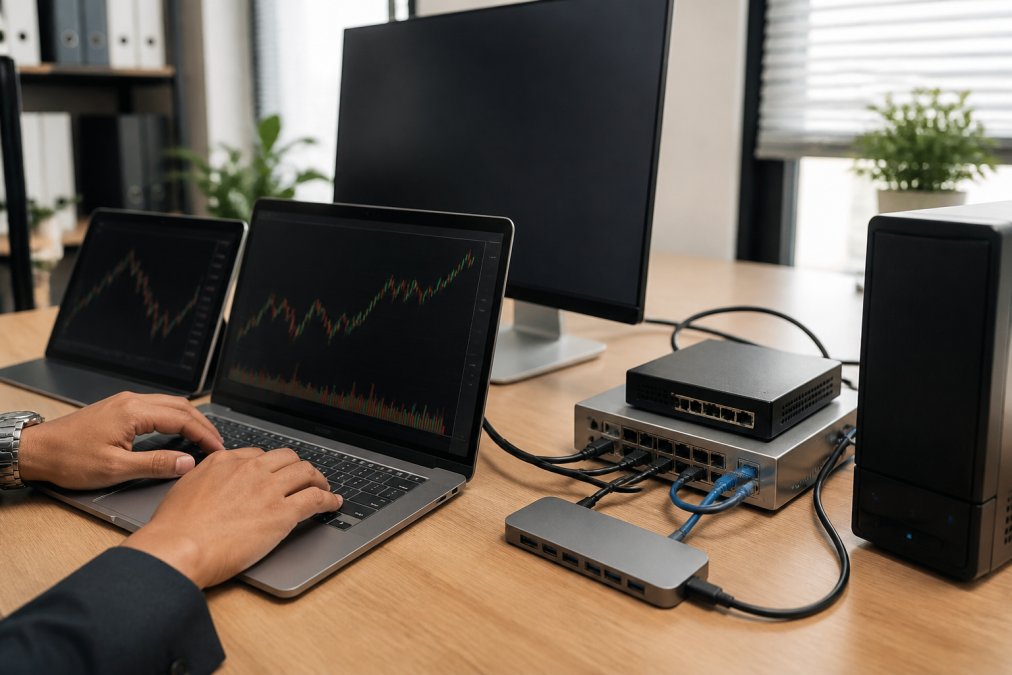
Step 1: Choose your platform and strategy. MT5 is the most accessible starting point. Either build a simple Expert Advisor using MQL5 or download a pre-built system. EZMT5 eliminates this step, download professional systems immediately, no coding required.
Step 2: Set up a VPS. Your home computer isn’t reliable enough for live trading. A VPS runs 24/7 in a data center. Choose a provider with low latency to your broker’s servers. Cost is typically $10-50 per month.
Step 3: Generate API credentials from your broker. Create API keys with restricted permissions, write access only for trading, not account withdrawal. Store credentials securely in environment variables, never hardcoded in your strategy file.
Step 4: Connect your system to the VPS. Copy your trading platform and strategy files to the VPS. Configure it to start automatically when the VPS boots. Test with paper trading first.
Step 5: Monitor and maintain. Check your system’s performance weekly. Look for unexpected behavior, rejected orders, or worse-than-expected slippage. Review logs to understand what happened.
Security checklist:
- Use strong, unique passwords for your VPS and broker account
- Enable two-factor authentication on your broker account
- Restrict API key permissions to the minimum needed
- Keep your VPS operating system and software patched
- Use a firewall to restrict inbound connections
- Encrypt sensitive files on your VPS
- Back up your strategy files and configuration regularly
Resist the urge to override your system or second-guess its decisions. If your system is sound, trust it. If you don’t trust it, fix it before going live.
Conclusion: Making Automated Trading Work for Your Schedule
Automated trading solves a real problem: you can’t watch markets all day. But automation is a tool, not a guarantee. Systems fail. Markets change. Leverage amplifies losses.
The professionals who succeed share common traits: they backtest rigorously, manage risk conservatively, monitor systems regularly, and adjust when live performance diverges from expectations.
EZMT5 eliminates the biggest friction point, building and optimizing systems from scratch. You get 11 professionally built MT5 trading systems and TradingView indicators, all included with future systems, with two license keys per system that you can change anytime. No contracts, no lock-in. Start trading like a pro immediately after download. Learn more about EZMT5’s automated trading systems and begin automating your trading today.
For traders serious about automation, the question isn’t whether to automate, it’s how to do it safely and sustainably. The systems that work over years aren’t the ones chasing maximum returns. They’re the ones that survive drawdowns, adapt to changing markets, and give you the freedom to focus on your actual job while your algorithms work.
Frequently Asked Questions
Does automated trading actually work for busy professionals?
Yes, automated trading systems can work effectively when properly configured and monitored. The key is setting predetermined criteria for trade entry and exit, then letting the algorithm execute trades based on those rules. Busy professionals benefit because trades execute automatically without requiring constant manual intervention. However, success depends on solid strategy development, realistic expectations about profitability, and ongoing risk management. Systems that worked well in backtesting may perform differently in live market conditions due to slippage, execution speed, and market volatility changes.
What are the main risks of using automated trading bots?
Common automated trading bot risks include algorithmic bias (systems performing well in backtests but failing in live markets), technical failures (API disconnections, VPS downtime), over-optimization (curve-fitting strategies to historical data), and inadequate risk management (excessive leverage or position sizing). Market volatility can trigger unexpected drawdowns, and slippage during execution can erode profitability. Security vulnerabilities also pose risks if API keys are mismanaged. The best protection involves rigorous backtesting across multiple market conditions, strict position sizing rules, real-time monitoring, and keeping API credentials secure.
How much capital do I need to start automated trading?
Capital requirements vary based on the trading instrument and broker requirements. For forex trading, some brokers allow accounts with $100-500. For stocks and futures contracts, margin requirements typically demand $2,000-10,000 minimum. Day trading stocks requires a minimum of $25,000 in the United States under SEC rules. Cryptoassets have lower minimums but higher volatility. Start with capital you can afford to lose entirely, and use position sizing to limit drawdown on any single trade. Many professionals recommend beginning with smaller accounts to test your automated system before scaling.
Are automated trading platforms regulated in the United States?
Yes, automated trading platforms operating in the United States are regulated by the SEC (Securities and Exchange Commission) for stock trading, the CFTC (Commodity Futures Trading Commission) for futures and derivatives, and the FinCEN (Financial Crimes Enforcement Network) for anti-money laundering compliance. If you're using a broker or platform to execute trades, that entity must be registered with the appropriate regulatory body. However, individual traders using their own algorithms on their own accounts have fewer restrictions. Always verify your broker's regulatory status and understand the compliance requirements for your specific trading instruments.
This article was written using GrandRanker