

Table of Contents
- Is Automated Trading Profitable? The Honest Answer
- How Automated Trading Systems Actually Work
- Manual Trading vs. Automated Trading: A Side-by-Side Comparison
- Automated Trading Strategies for Beginners: Where to Start
- Risks of Algorithmic Trading Every Trader Must Understand
- Factors That Determine Whether Automated Trading Is Profitable for You
- Best Automated Trading Software for Serious Traders
- Conclusion
Last Updated: June 13, 2026
Is Automated Trading Profitable? The Honest Answer
The question has no single clean answer. Algorithmic trading removes emotion and executes with speed no human can match, but it does not remove risk or replace strategy. A well-backtested strategy with disciplined risk management can generate consistent returns. A poorly configured bot running a bad strategy will lose money faster than manual trading ever could, because it executes mistakes at scale.
Below, we cover seven key facts every trader needs before going live: infrastructure costs, the psychological shift automation creates, and the regulatory traps that catch retail traders off guard.
What Separates Profitable Systems from Losing Ones
Profitable automated systems share three characteristics: a genuine trading edge, realistic backtested expectations, and active post-deployment monitoring. Losing systems fail on one of those three, most often the first. Many traders automate a strategy that was never profitable, expecting the algorithm to fix the underlying logic. It won’t.
How Automated Trading Systems Actually Work
Automated trading uses computer algorithms to execute orders based on predefined rules without manual intervention. A basic automated system contains four components:
- Data feed – real-time or historical price and volume data from the broker or a third-party provider
- Strategy logic – the coded rules defining entry, exit, stop-loss, and position sizing
- Execution engine – the module that sends orders to the broker via API
- Risk controls – hard limits on drawdown, position size, and daily loss thresholds
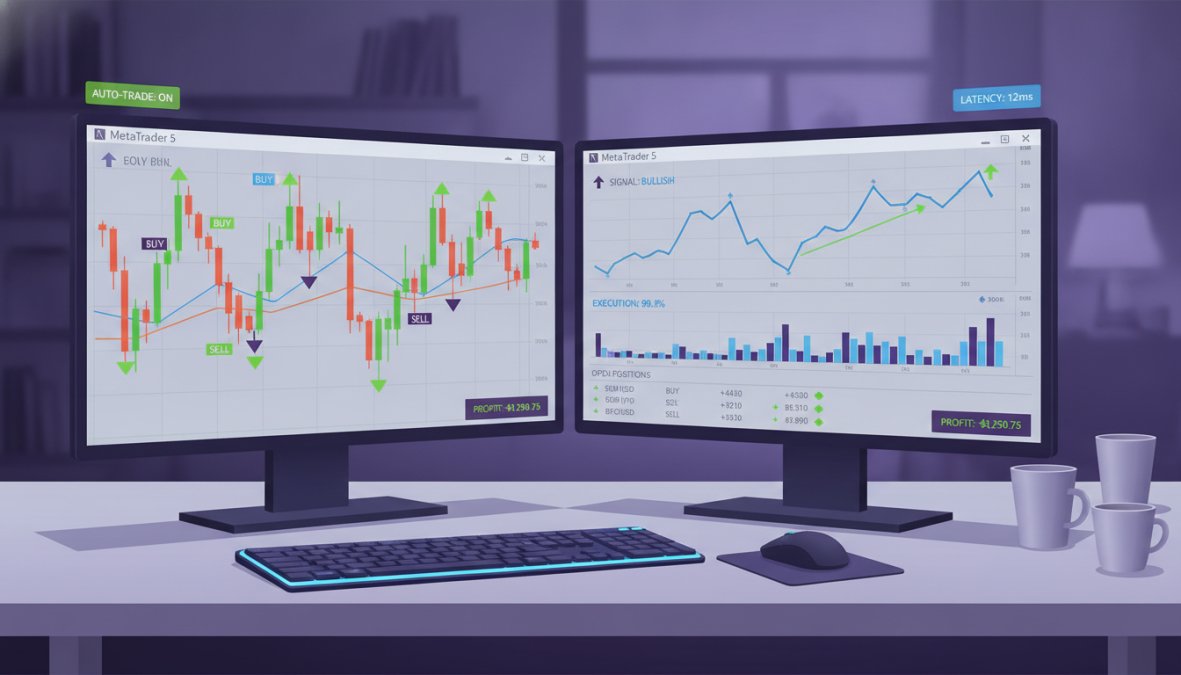
Execution speed is a core advantage. A human reacts in hundreds of milliseconds at best; an algorithm on a co-located server reacts in microseconds. For strategies that capture brief price inefficiencies, that gap is decisive.
The Role of Expert Advisors and Trading Bots
Expert Advisors (EAs) are automated trading programs built for MetaTrader 4 and MetaTrader 5, coded in MQL4 or MQL5. Trading bots is a broader term covering any automated execution system, including those built on Python or C#. MetaTrader 5 remains the dominant retail algorithmic trading platform due to its EA library, multi-asset support, and broker compatibility. Pre-built systems like those offered through EZMT5 eliminate the MQL5 learning curve entirely, giving traders access to 11 fully optimized MT5 Trading Systems and TradingView indicators without writing a single line of code.
Backtesting, Strategy Optimization, and the Curve Fitting Trap
Backtesting runs a strategy against historical data to evaluate past performance. It is the most important validation step before going live, and the most commonly misused one. The curve fitting trap occurs when a strategy is tuned so precisely to historical data that it fails in live markets. Signs include backtested win rates above 80% on short time frames, oddly specific parameters, performance that degrades sharply on out-of-sample data, and minimal backtest drawdown followed by large live drawdowns.
Never go live with a strategy tested only on in-sample data. Always reserve at least 30% of historical data for out-of-sample validation. Skipping this step is the single most common cause of live trading failure for retail algorithmic traders.
Manual Trading vs. Automated Trading: A Side-by-Side Comparison
This is not a binary choice. The real question is which approach fits your strategy type, available time, and psychological makeup.
| Factor | Manual Trading | Automated Trading |
|---|---|---|
| Execution speed | Seconds to minutes | Milliseconds |
| Emotional discipline | Inconsistent | Consistent (by design) |
| Strategy scalability | Limited by attention | Runs 24/7 across multiple pairs |
| Backtesting capability | Difficult, time-intensive | Full historical testing available |
| Adaptability to news | High (human judgment) | Low (rule-based only) |
| Infrastructure cost | Minimal | VPS hosting, data feeds required |
| Learning curve | Moderate | High (without pre-built systems) |
| Drawdown control | Prone to override | Enforced by code |
Manual trading wins in environments requiring discretionary judgment, major news events or thin markets. Automated trading wins in systematic, rules-based strategies where consistency and speed matter more than real-time interpretation. According to research on algorithmic trading adoption in retail markets, the share of retail traders using automated execution has grown substantially over the past decade. Most successful retail traders use a hybrid approach: automation handles execution and risk management; human oversight handles strategy selection and monitoring.
Automated Trading Strategies for Beginners: Where to Start
The biggest mistake beginners make is starting with complexity. A moving average crossover is far easier to validate and troubleshoot than a multi-indicator neural network. Start simple; add complexity only when the simple version is proven.
Practical starting points:
- Trend-following systems – enter in the direction of a confirmed trend, exit when momentum reverses
- Mean reversion strategies – trade the assumption that price returns to a statistical average after deviating
- Breakout systems – enter when price breaks a defined support or resistance level with volume confirmation
- Grid trading – place orders at fixed intervals above and below a price, profiting from volatility in ranging markets
Each has clear logic, a testable edge, and a defined exit condition, all four can be rigorously backtested before any capital is at risk.
Choosing the Right Platform and Broker Integration
Platform selection determines your backtesting capability, execution quality, and access to trading signals. Key criteria:
- Broker integration: Poor API connectivity introduces latency and execution errors
- Backtesting engine: MetaTrader 5’s strategy tester handles multi-threaded tick-data tests natively; QuantConnect offers this for Python-based strategies
- Data quality: Accurate spreads and slippage modeling produce realistic backtests
- Support and community: A large user base means faster troubleshooting
For traders who want to skip the learning curve entirely, EZMT5 provides instant access to 11 professional MT5 Trading Systems, fully built, ready to deploy after download, with two license keys per system and no contract commitment.
Risks of Algorithmic Trading Every Trader Must Understand
Automated trading carries risks manual trading does not. According to CFTC guidance on retail automated trading risks, system failures, connectivity issues, and unvalidated strategies are among the leading causes of unexpected losses for retail algorithmic traders.
Core risks include:
- System failure: Bugs, platform crashes, or data feed interruptions can cause runaway orders or missed exits
- Slippage: The gap between expected and actual fill price compounds significantly at high trade frequency
- Drawdown: Automated systems can hit maximum drawdown thresholds faster than manual traders because they execute continuously
- Over-optimization: A strategy that looks perfect in backtests may have no real edge
- Market regime change: A strategy profitable in trending markets may lose consistently in ranging conditions, an algorithm cannot recognize that shift the way a human can
Infrastructure, Latency, and VPS Hosting Costs
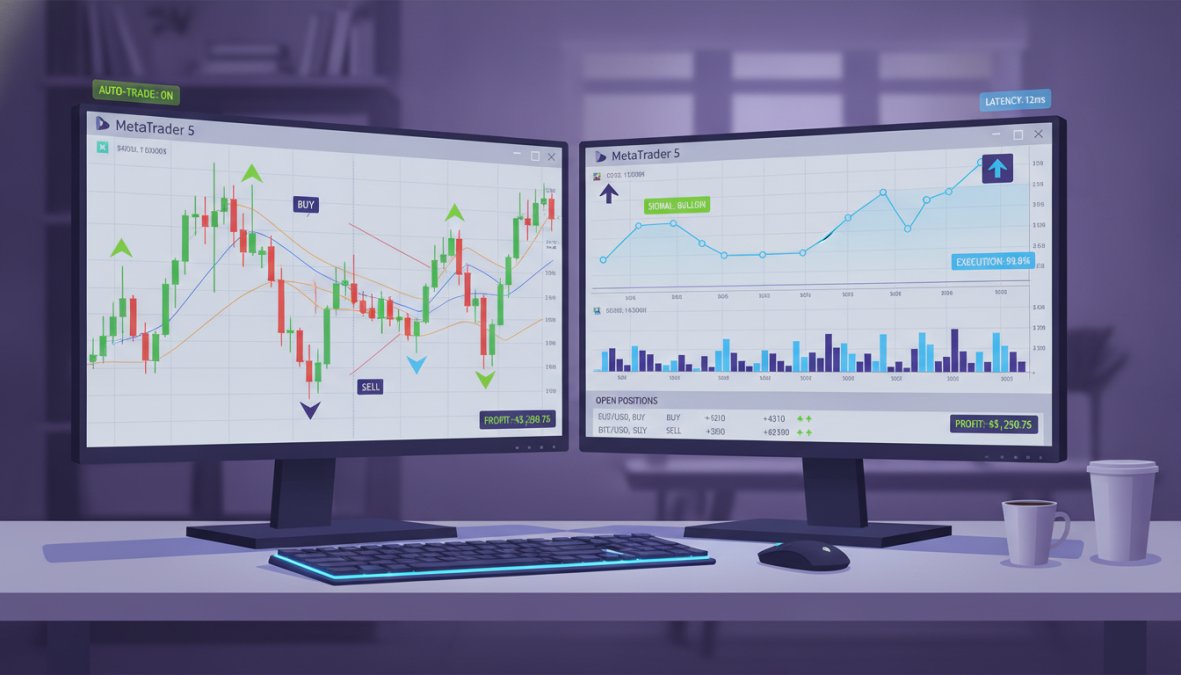
Running an automated trading system requires infrastructure with real costs that eat into profitability. A VPS is essential for 24/7 operation. Latency, the delay between your server and your broker’s execution engine, directly affects fill quality. A system running on a home PC in a different country from the broker’s servers will experience meaningfully worse execution than one co-located nearby.
Practical considerations:
- VPS location: Choose a provider with servers in the same city as your broker’s execution servers
- Connection stability: A dropped connection during an open trade is a serious risk
- Hardware specifications: Adequate RAM and CPU prevent slowdowns during high-volatility periods
- Monitoring tools: Automated alerts for system downtime are essential, not optional
Factor these costs into your profitability calculations before going live.
Post-Deployment Monitoring and System Failure
Going live is not the finish line. A strategy generating consistent returns for six months can degrade as conditions shift. Without active monitoring, you won’t notice until drawdown has already exceeded acceptable levels. Establish a review cadence: check performance metrics weekly, review strategy logic monthly, and run fresh out-of-sample tests quarterly.
Set a hard drawdown kill switch before going live. Define the maximum loss threshold at which the system stops trading automatically. This single safeguard prevents a bad week from becoming an account-ending event.
Factors That Determine Whether Automated Trading Is Profitable for You
Whether automated trading is profitable comes down to five variables: strategy quality, capital size, infrastructure investment, discipline in monitoring, and realistic return expectations. A strategy returning 40% annually but experiencing 35% drawdown is not a good strategy for most traders, risk-adjusted return is the metric that matters. Institutional quant funds have advantages retail traders cannot replicate. The winning retail approach is finding edges in time frames and niches that institutional capital ignores.
Psychological Impact of Automation: The Hidden Edge
Automated systems remove cognitive failure modes by design, the algorithm does not feel the pain of a losing trade. Manual traders battle fear, greed, revenge trading, and the tendency to override a good system on gut feeling. The flip side: automation can create false security. Traders who automate a flawed strategy sometimes disengage from oversight because they believe the system handles everything. That disengagement is dangerous.
Regulatory and Tax Implications of Algorithmic Trading
Regulatory and tax treatment of automated trading varies significantly by jurisdiction. As documented in IRS guidance on trader tax status and capital gains, the frequency and nature of your trading activity affects how gains are classified and taxed.
Key considerations:
- Tax classification: High-frequency automated trading may qualify for trader tax status in some jurisdictions
- Wash sale rules: Systems that re-enter positions quickly can inadvertently trigger wash sale disallowances on losses
- Broker reporting: Ensure your broker provides accurate trade logs compatible with your tax reporting requirements
- Regulatory compliance: Some jurisdictions restrict or require registration for certain algorithmic trading activity
Consult a tax professional familiar with trading before scaling an automated system. Tax drag on a high-frequency strategy can significantly reduce net profitability.
Best Automated Trading Software for Serious Traders
Selecting the best automated trading software depends on your technical background, target market, and how much of the system you want pre-built versus custom-coded.
The best automated trading software is the one that matches your actual skill level and strategy type. A beginner using a platform built for quant developers will waste months on setup. An experienced developer using a no-code platform will hit its ceiling within weeks.
| Platform | Best For | Key Strength | Starting Price |
|---|---|---|---|
| EZMT5 | Serious MT5 traders wanting pre-built systems | 11 optimized systems, instant deployment | Monthly subscription |
| MetaTrader 5 | EA-based forex and CFD trading | Massive EA library, broker compatibility | Free |
| QuantConnect | Python/C# developers | Professional backtesting, 20+ broker integrations | $60/month |
| MultiCharts | Advanced multi-broker execution | Portfolio-level strategy testing | $97/month |
| Trade Ideas | Active stock traders | AI-powered scanning, no-code automation | Contact for pricing |
| TrendSpider | Technical analysis automation | Automated trendline drawing, strategy testing | Contact for pricing |
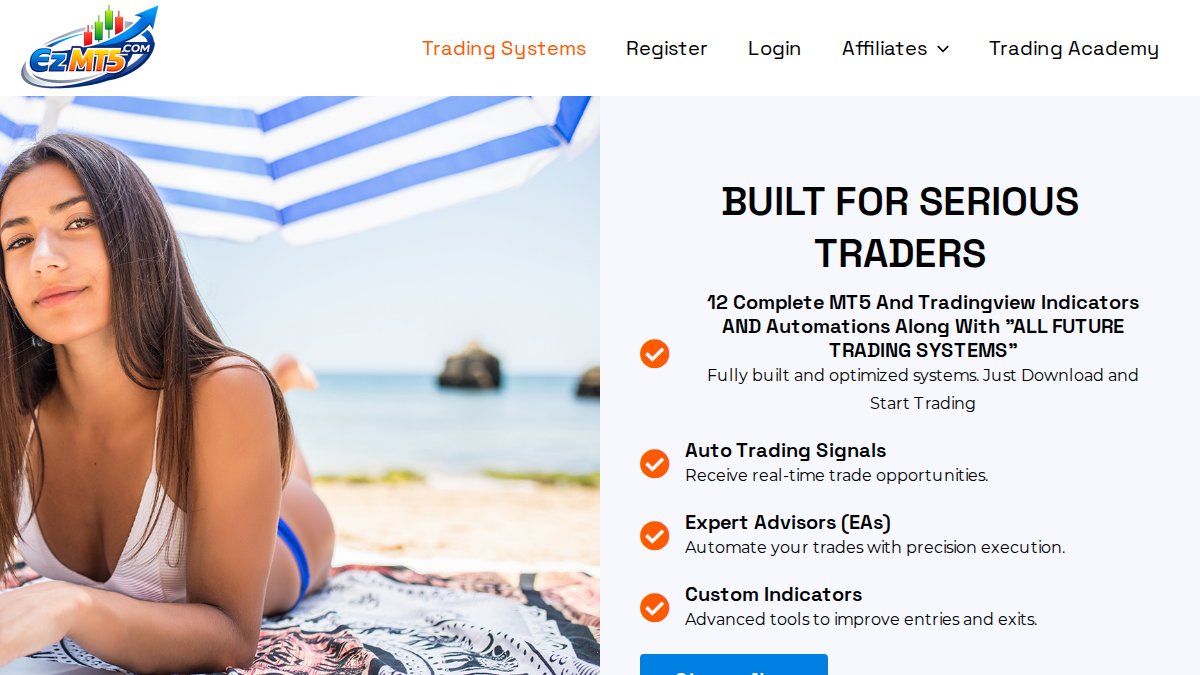
EZMT5 is the top pick for traders who want to skip the build phase entirely, instant, unlimited access to 11 professional MT5 Trading Systems and TradingView indicators, deployable immediately after download, with two license keys per system, no contracts, and all future systems included.
MetaTrader 5 is the right choice for building your own EAs or accessing the MQL5 marketplace. The platform is free through most brokers, but budget two to three months before expecting production-ready custom strategies.
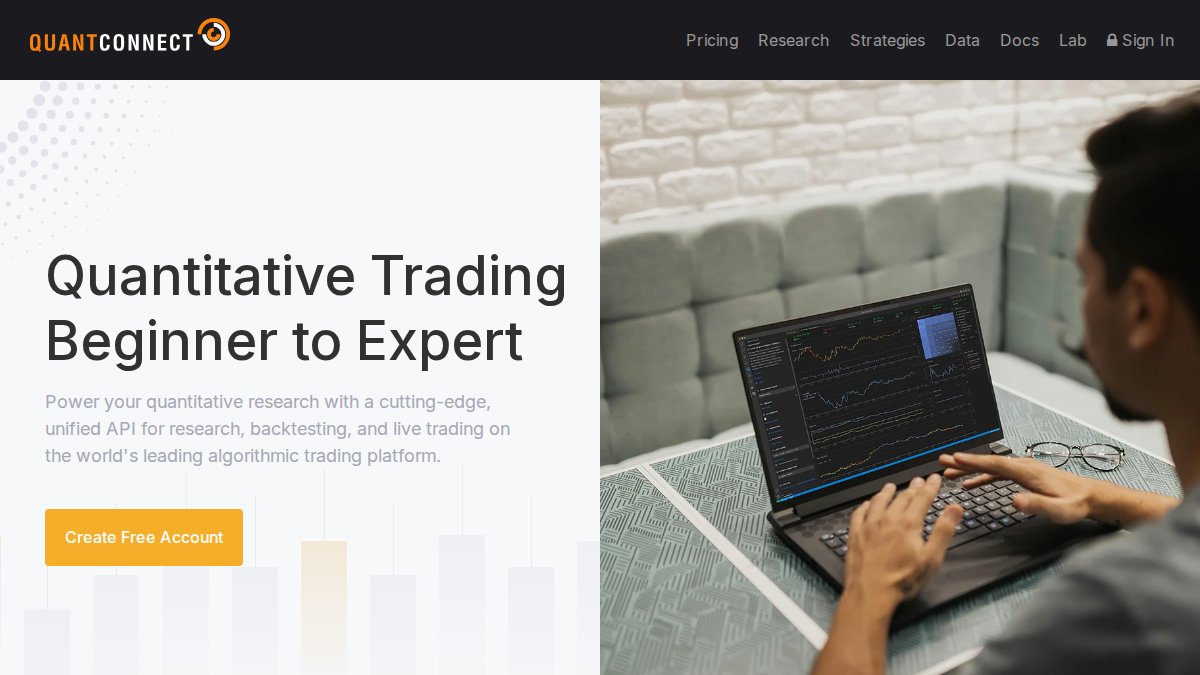
QuantConnect suits traders with programming backgrounds who want institutional-grade backtesting across multiple asset classes. The browser-based IDE and integrated data library remove local data management needs, but Python or C# proficiency is required.
MultiCharts targets advanced traders needing high-performance backtesting and multi-broker connectivity. At $97/month, it requires a dedicated VPS for optimal 24/7 performance. Trade Ideas combines AI-powered scanning with the Brokerage Plus module for automated execution in a no-code workflow. TrendSpider automates trendline drawing, Fibonacci levels, and complex alert conditions, primarily an analysis tool rather than a high-frequency execution platform.
According to overview of algorithmic trading platform categories for retail traders, the retail algorithmic trading software market has expanded considerably, with no-code and low-code platforms now making systematic trading accessible to traders without programming backgrounds.
Automated trading is not a passive income machine, and traders who treat it as one lose money. Traders who treat it as a precision tool, requiring a valid strategy, proper infrastructure, active monitoring, and disciplined risk management, generate consistent results. EZMT5 was built for that second group: traders serious about systematic execution who want professional-grade MT5 Trading Systems and TradingView indicators without months of development. With instant access to 11 fully optimized systems, two license keys per system, and no contract requirement, you can start trading with professional-grade automation today. Sign up now and begin trading like a pro immediately after download.
Frequently Asked Questions
Can you really make money with automated trading?
Automated trading can be profitable, but it is not a guaranteed income source. Profitability depends on the quality of the underlying strategy, robust risk management, proper backtesting, and ongoing monitoring. Retail traders who treat automated systems as a 'set and forget' solution often face drawdown and losses. Those who actively manage their systems, monitor performance metrics, and adapt to changing market volatility tend to see more consistent results over time.
What are the biggest risks of algorithmic trading?
The key risks of algorithmic trading include over-optimization or curve fitting during backtesting, slippage during live execution, system failure or connectivity issues, and latency problems if proper VPS hosting is not used. There is also the risk of algorithmic bias, where a strategy performs well on historical data but fails in live market conditions. Capital preservation should always be the primary focus, especially for retail traders starting out with automated systems.
Is automated trading better than manual trading?
Neither is universally better, each has distinct advantages. Automated trading offers superior execution speed, removes emotional decision-making, and can monitor multiple markets simultaneously. Manual trading allows for nuanced judgment and adaptability to unusual market conditions. Many experienced traders combine both approaches: using automated systems for trade execution while applying manual oversight for strategy adjustments and risk management decisions.
Do I need coding skills to start automated trading strategies as a beginner?
Not necessarily. Platforms like EZMT5 provide fully built and optimized MT5 trading systems that beginners can deploy immediately after download without any programming knowledge. Other no-code tools like Composer and Tradetron also allow strategy deployment via visual interfaces. However, understanding the logic behind your automated trading strategies, even without writing code, is strongly recommended to manage risk effectively and know when to intervene.
What is the best automated trading software for retail traders?
The best automated trading software depends on your goals and experience level. For MetaTrader 5 users, EZMT5 offers instant access to 11 professional, pre-built trading systems with no contracts required. QuantConnect suits traders who prefer coding in Python. Trade Ideas is strong for stock traders wanting AI-driven scanning. For beginners, platforms with pre-built Expert Advisors and clear broker integration, like those built on the MT5 ecosystem, typically offer the most accessible starting point.
This article was written using GrandRanker